
Reporting Under Repressive Regimes: Balancing Between Ethics and Safety
Also see

Iran’s Digital Darkness
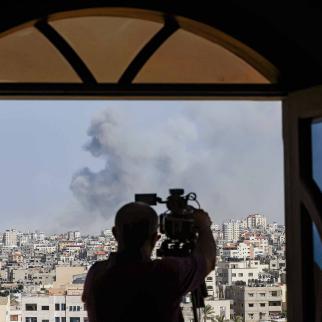
“This war is simultaneously eroding fundamental pillars of press freedom: access to information, the ability to verify facts and the safety of journalists.”

Independent Journalism in Cuba: It’s Illegal – But It Happens
Improvised newsrooms are beginning to take shape: a phone, a notebook and someone willing to tell the world what is happening.

Exiled Myanmar Media Keep Reporting Alive
The junta has systematically dismantled press freedom by arbitrarily arresting, jailing and even killing reporters as well as imposing internet shutdowns.

Myanmar: “We Continue Reporting the Junta’s Abuses”
Hybrid media outlet uses mix of diaspora staff and citizen journalists to report on events in Shan state.

Ukraine: On the Frontline of Trauma-Sensitive Reporting
Journalists play a vital role in protecting human dignity and upholding human rights overall through survivor-centered reporting.

Egypt: Success at a Double Cost
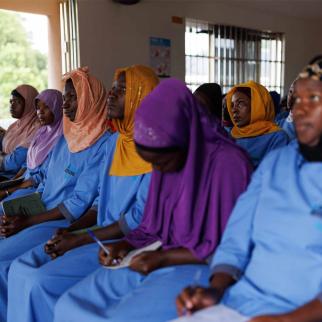
Women journalists carry an extra burden to prove their competence.
Amid growing authoritarianism, journalists and news outlets in the world’s most repressive environments are becoming ever more innovative to safely continue their work.
There are no “one size fits all” guidelines on how to work in such challenging environments. The different global contexts where IWPR operates with local journalists and media outlets are widely varied and nuanced. Hybrid threats from regime officials and non-state actors alike can combine with physical and digital danger as well as psychological stress.
In some repressive areas, such as several countries in the Middle East, environmental issues are an area in which there may be more freedom to report. In Latin America, given collusion between organized crime and large corporations, the opposite is often true.
IWPR partners have become ever more innovative and flexible to ensure they can continue reporting while staying safe - and ethical.
Risk assessment and mitigation are key to strategically understand the context and ecosystem in which we work. This helps determine where individual journalists and media outlets fit within this environment to identify the types of risks and to operate accordingly without compromising security.
Non-state actors can also be major perpetrators of media repression, sometimes operating autonomously or at other times enabled by the state in a semi-official or clandestine manner.
These diverse actors—ranging from armed militias, criminal gangs, powerful corporations and digital mobs, hackers and proxy media outlets — can also create a dangerous environment for independent journalism.
“Regardless of location and continuing authoritarian pressures, independent journalism continues to find a way to survive and even flourish."
Figuring out how to balance self-censorship – regardless of the reasons behind it – with the risks and threats individual journalists and media outlets face can be a matter of survival. And every context is unique when it comes to what is considered as a red line. While some are set in stone, many are not: so much depends on where you are physically based, who you know, how you frame your story or even what examples you include.
In Iraq, for instance, journalists and media outlets are technically banned from even using the word “gender” in their output. Nonetheless, IWPR partner Jummar, an independent Iraqi media outlet, is able to extensively report on women’s rights and gender issues in Iraq and even elsewhere in the region where many local media outlets struggle to address such issues.
Using a hybrid model with contributors and logistics spread within Iraq and the wider Middle East as well as Europe gives them a level of flexibility. Their mentoring and support allows an extensive network of contributors to share work with other publications and institutions, encouraging a richer and more nuanced public discourse on Iraq.
International collaborations can provide an extra layer of security; a media partnership with the UK’s Guardian newspaper in which Jummar explored the legislative changes allowing religious authorities to rule on marriage and inheritance, which basically facilitates child marriage.
Building local coalitions can also be a powerful means to navigate repressive spaces, especially building on the unique nexus between independent media and civil society. For instance, one IWPR alliance brought together independent Venezuelan media and digital rights groups to publish dozens of stories investigating and exposing organised pro-regime propaganda networks.
North Africa is another challenging region for independent journalists and media outlets. Working in a very difficult environment, IWPR’s longtime partner The Libyan Center for Freedom of Press (LCFP) continues to independently monitor violations, track hate speech and promote media safety.
LCFP regularly publishes reports and statements as well as conducting advocacy campaigns on freedom of expression. The center also builds local connections together with international collaborations, allowing them to navigate many of the red-lines that other Libyan media outlets cannot.
Repressive environments are extremely nuanced, constantly testing the journalist’s ethical practices and values. Reporting on a non-state actor or covering a government press conference does not mean taking one side at the expense of another. Reporting should always present the opposing sides in a balanced manner.
Digital outlets operating remotely have more space to cover more sensitive topics, working with in-country reporters who often remain anonymous .
IWPR partner Zan Times, for instance, is a woman-led investigative outlet that works with an extensive network of reporters on the ground inside Afghanistan to continue to cover human rights violations with a focus on gender.
Exiled journalists are in a unique position to challenge regime narratives, often working with activists and other journalists on the ground, acting as a bridge to share information and provide training and support to report from high-risk zones.
A recent IWPR-supported investigation by FOCOS media, a Costa Rica-based regional investigative outlet, documented how President Nayib Bukele’s hardline policies have catastrophically impacted the El Salvador’s civic space.
Published in in Spanish via FOCOS, and in English via openDemocracy, the story demonstrated how exile journalists also serve as watchdogs of states which have eliminated independent media at home, providing a sense of community with the diaspora.
It is important to remember that journalists and media outlets help drive reporting on repressive environments as they continue to face physical, digital and legal threats from their home states even after leaving their countries.
The deportation of Syrian journalist Samer Mokhtar from Egypt is a recent example, coinciding with a wide digital attack that also targeted his ex-wife – another journalist – and their young son.
Diaspora media outlets also face huge sustainability challenges. They frequently struggle with funding and resources, despite their high impact on keeping information flowing.
But regardless of location and continuing authoritarian pressures, independent journalism continues to find a way to survive and even flourish. Giving in to repression and self-censorship is never an option.