
Myanmar: “We Continue Reporting the Junta’s Abuses”
Hybrid media outlet uses mix of diaspora staff and citizen journalists to report on events in Shan state.

Also see

Iran’s Digital Darkness
“This war is simultaneously eroding fundamental pillars of press freedom: access to information, the ability to verify facts and the safety of journalists.”

Independent Journalism in Cuba: It’s Illegal – But It Happens
Improvised newsrooms are beginning to take shape: a phone, a notebook and someone willing to tell the world what is happening.

Exiled Myanmar Media Keep Reporting Alive
The junta has systematically dismantled press freedom by arbitrarily arresting, jailing and even killing reporters as well as imposing internet shutdowns.


Ukraine: On the Frontline of Trauma-Sensitive Reporting
Journalists play a vital role in protecting human dignity and upholding human rights overall through survivor-centered reporting.

Egypt: Success at a Double Cost
Women journalists carry an extra burden to prove their competence.
My wife and I were hopeful, like many in the Shan community, about what was happening to our country before the coup. That is why in March 2019 we left Chiang Mai, Thailand where I had been working with an international human rights organisation, to return to Shan state to raise our children.
But when the coup happened, all our dreams were gone. My wife and kids - my daughter was then seven years old, and my twin sons were just four years old - had to flee the fighting and bombs. We had to hide in the mountains in the northern Shan state for safety. My children were crying and so afraid.
With the help of family and friends from human rights organisations, I was able to flee to Chiang Mai along with other colleagues from SHAN. It took me a year to prepare the processes for my wife and children. Finally, around March 2022, my wife and children joined me in Chiang Mai.
My children now have a ‘normal’ life – they go to school and play outside. But they still remember our days of running from the air strikes during the coup. I still have nightmares and flashbacks. My colleagues at SHAN also experience the same - some of them were found to have PTSD – which is why we have a mental health and wellness programme for journalists and other staff. We need to take care of ourselves so that we can keep fighting, keep amplifying our community’s voices.
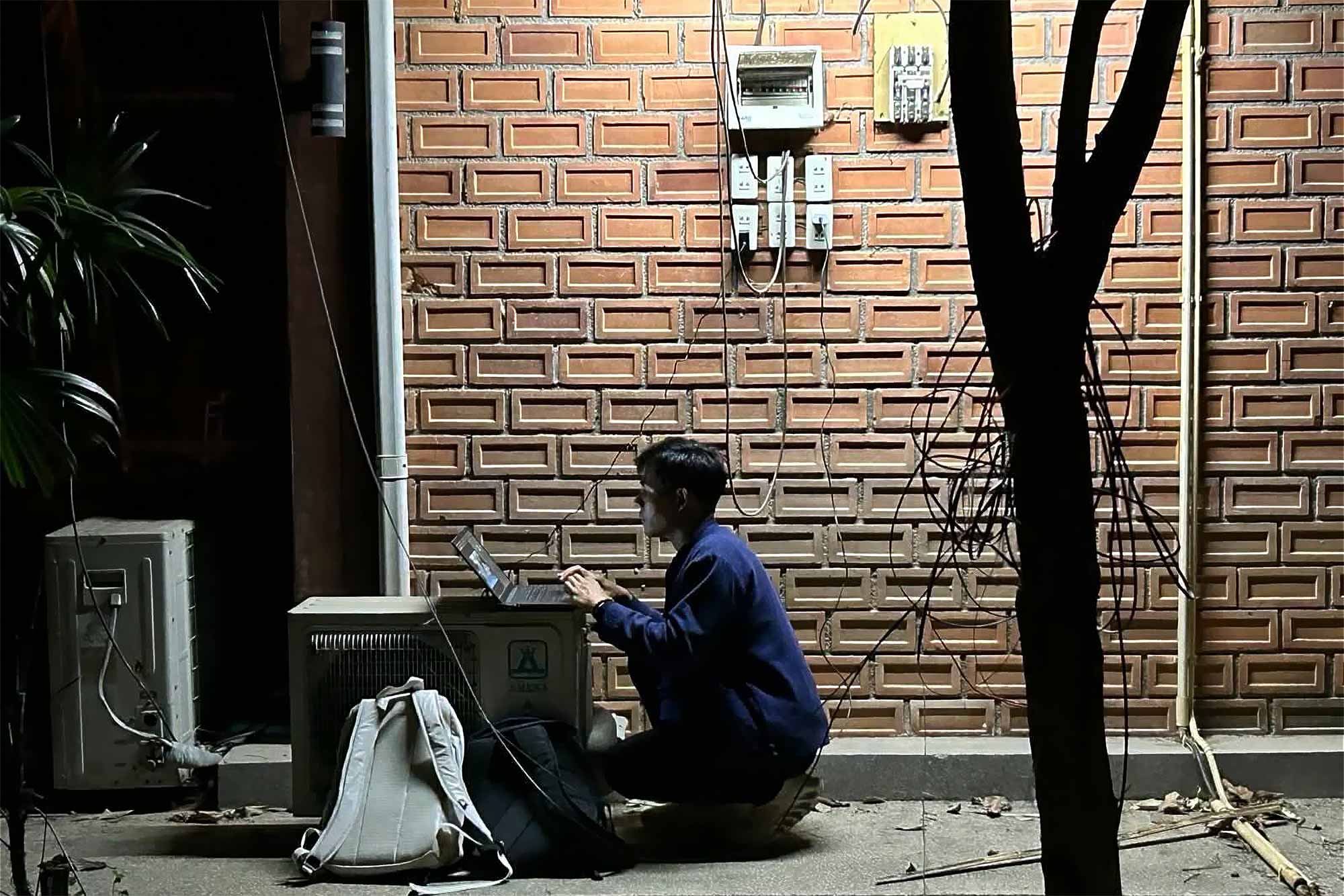
We were based and operating in Shan state before the coup. The military immediately cracked down on media through internet and mobile network shutdowns and so we had to flee to Chiang Mai to continue reporting.
“We will continue telling the stories on the junta’s abuses and hardships of our people despite the huge risks."
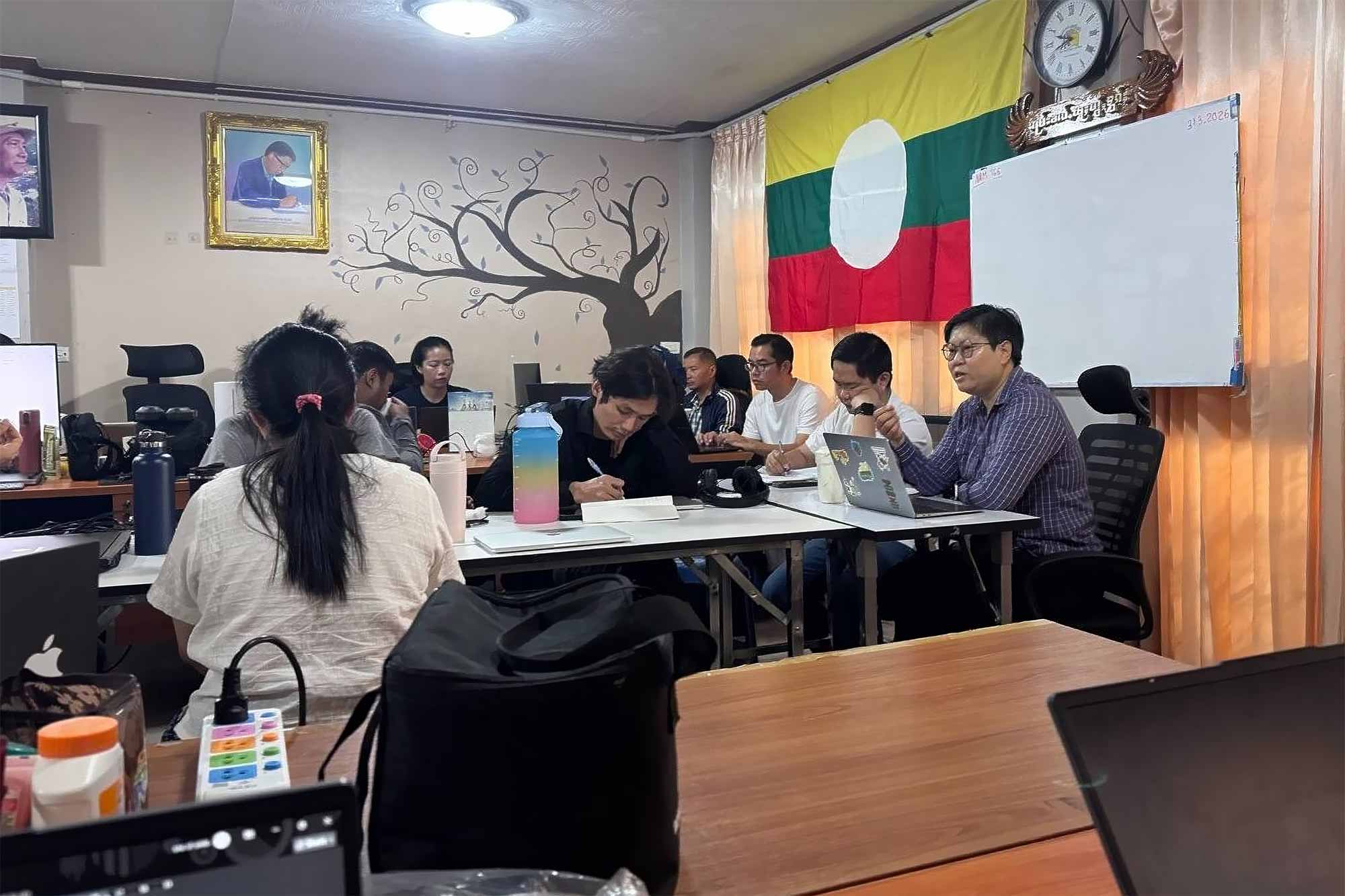
As of now, we have 30 staff in Chiang Mai, mostly very young, committed and passionate journalists. Back in Shan state, we have three young reporters in their 20s who gather data and interviews from the ground but keep a very low profile for safety. They chose to stay in Shan for personal reasons, like taking care of their aging parents.
They are members of the civil disobedience movement, resisting the junta since 2021.
We also rely on SHAN's wide network of up to 50 citizen journalists to cover Shan’s 55 townships whom we train and mentor in research, writing and maintaining their safety.
Most often, they do the interviews with the community and send us the raw data through email or messenger, if there is internet, or through phone calls with our Chiang Mai-based reporters. Phone calls are very expensive, but we need to get information from the ground.
We experience people refusing to be interviewed for fear of arrest and detention under the junta. But for other members of the community, such as businesspeople and educators, they are not afraid to be interviewed and quoted.
We learned how to ‘compromise’ - not self-censor – in some stories when the need arises, for the safety of our field reporters and citizen journalists. For instance, we publish in Shan and Burmese languages as well as in English. When a junta official in Shan tells our field reporters and citizen journalists to remove a local-language story they saw on our website or social media pages, we do this immediately. But, since most of them don’t understand English, we publish the same stories on our website in English. We experience this challenge at least once every quarter. A story on the junta seizing food aid is one example of when we took down the local-language version but still published it in English.
Our main priority is the safety and security of our field reporters and citizen journalists.
We will continue telling the stories on the junta’s abuses and hardships of our people despite the huge risks. I hope the international community won’t forget us.