
Exiled Myanmar Media Keep Reporting Alive
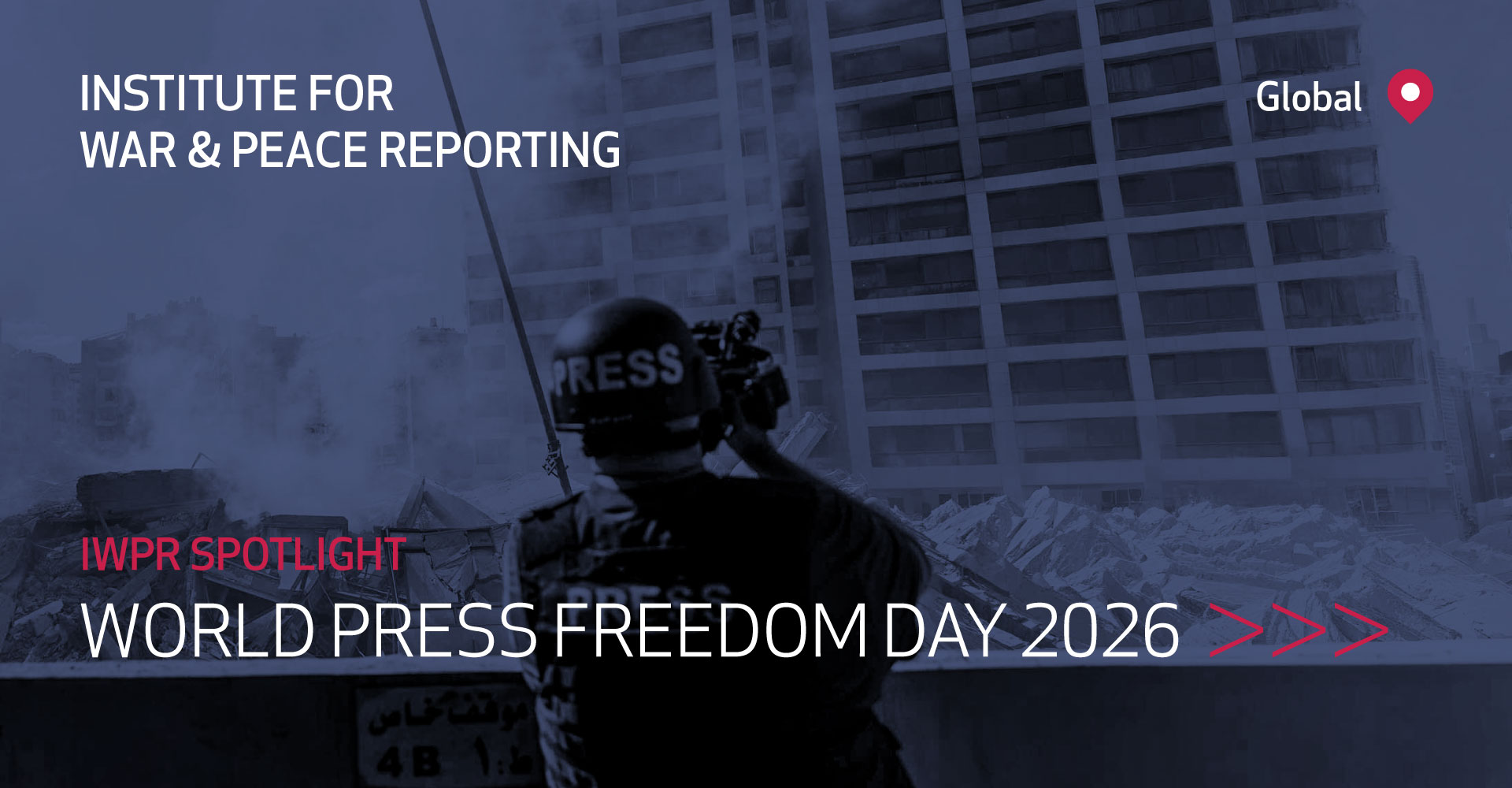
The junta has systematically dismantled press freedom by arbitrarily arresting, jailing and even killing reporters as well as imposing internet shutdowns.

Also see

Iran’s Digital Darkness
“This war is simultaneously eroding fundamental pillars of press freedom: access to information, the ability to verify facts and the safety of journalists.”

Independent Journalism in Cuba: It’s Illegal – But It Happens
Improvised newsrooms are beginning to take shape: a phone, a notebook and someone willing to tell the world what is happening.

Myanmar: “We Continue Reporting the Junta’s Abuses”
Hybrid media outlet uses mix of diaspora staff and citizen journalists to report on events in Shan state.


Ukraine: On the Frontline of Trauma-Sensitive Reporting
Journalists play a vital role in protecting human dignity and upholding human rights overall through survivor-centered reporting.

Egypt: Success at a Double Cost
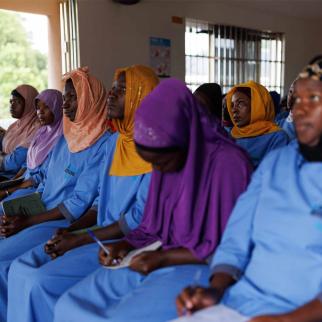
Women journalists carry an extra burden to prove their competence.
In the aftermath of Myanmar’s February 2021 military takeover, independent journalist Linn soon fell foul of the regime’s crackdown on free expression.
Having overthrown the elected government led by Aung San Suu Kyi, ending a decade of partial civilian rule, the junta - known as the Tatmadaw – quickly moved to clamp down on the media.
Just two weeks after seizing power, the regime revised Article 505 (A) of the penal code, criminalising any form of comment that could “cause fear” or spread “false news”.
In August that year, after the junta had already imprisoned and killed thousands of civilians, soldiers arrested Linn and a colleague in Yangon’s Mingala Taungnyunt township under Article 505 (A) for allegedly criticising the military in Facebook posts.
Taken into custody and tortured, Linn said he and his colleague did not admit to the soldiers they were journalists “or else we would no longer be alive”.
"I had to flee because I no longer felt safe in my own country.”
Linn, a reporter for more than 15 years, has been living in Bangkok for more than two years now, one of the significant number of journalists from Myanmar forced into exile as the junta systematically dismantled press freedom in a country just seeing the gradual impact of a decade of civilian life.
"I had to flee because I no longer felt safe in my own country,” Linn, 49, told IWPR.
With at least 35 journalists in jail convicted of terrorism, Myanmar is among the top three jailers of media workers alongside China and Israel, the Committee to Protect Journalists reported last year.
The junta has also tightly controlled the flow of information inside Myanmar by revoking licenses of independent media outlets, raiding newsrooms, arbitrarily arresting, jailing and even killing journalists, as well as imposing internet shutdowns.
Linn said that he had finally decided to leave Myanmar in 2024, after police and junta personnel repeatedly visited his home in Yangon asking his parents, both in their 80s, about his work as a journalist.
“They detained my father – already frail and old – for four days," Linn said.
Told by security officials that his son would be immediately imprisoned when he was found, Linn’s father managed to call and urgently advise him not to return home.
Friends and family helped Lin to quickly secure his visa and passport and he fled to Myawaddy, an eastern Myanmar town along the border with Thailand.
“I felt lucky that time because I was able to cross the border legally,” Linn continued, explaining that he had posed as a driver trying to cross the border for work. Other journalists and civilians attempting to take the same route were detained at checkpoints and later thrown into jail.
Linn is among many Myanmar journalists forced into exile who, settling mostly in Bangkok and the northern Thailand city of Chiang Mai, continue to work to keep independent reporting alive in their home country.
Rights monitoring groups estimate that more than 60 independent media - nearly 90 per cent of the outlets operating before the military seized power – now exist in exile, mostly in Chiang Mai.
Many of them operated through donor support, but the sudden change in the US foreign funding priorities in January 2025 essentially put Myanmar’s exiled journalism into freefall.
“As international attention is diverted toward other global conflicts and geopolitical shifts, financial aid for the Myanmar media sector is steadily declining,” a media worker who also fled to Thailand in 2022, and who asked to remain anonymous, told IWPR. “Securing sustainable support is critical; it would not only create job opportunities for displaced journalists but also ensure the continued production of vital news.”
She noted that while entertainment-based media could still generate revenue via social media, news outlets focusing on politics and economics found it nearly impossible to monetise their content.
“Advertising revenue is scarce, and traditional income streams—such as subscriptions or publication sales—are no longer effective in Myanmar,” she continued. “Consequently, independent media remains entirely dependent on dwindling international donor funding to survive this crisis.”
This also means that freelancers like Linn have no choice but to work multiple jobs to finance their independent reporting as well as to support their families, many of them still living in uncertainty in Myanmar.
Linn helps his wife buy and sell fashion products, and sometimes works as a travel agent and English interpreter.
The incomes from these multiple jobs mean he can pursue his freelance media work – the most recent as a stringer covering the recent Myanmar elections, the first since the coup but generally regarded as sham. Min Aung Hlaing, the architect of the 2021 military coup, was elected president.
Linn said that he knew half-a-dozen other previously full-time journalists in exile in Bangkok working multiple jobs so that they could continue reporting on human rights issues in Myanmar.
They also provide help in terms of research and contacts – remotely – for foreign media outlets during important events, such as the recent elections and the March 2025 earthquake in central Myanmar which killed more than 5,000 people.
Living in exile in Thailand in order to continue media work is expensive, Linn said. He recently paid 200,000 baht (6,180 US dollars) to a travel agency to switch his visa status for another two years so he can work with Thai employers.
“I have no more savings, but I need to do this so that I can still do my media work and support my family back home,” Linn explained. “I want to go back to my country, but it remains too risky. We just need to do what we can while here.”