
Iran’s Digital Darkness
“This war is simultaneously eroding fundamental pillars of press freedom: access to information, the ability to verify facts and the safety of journalists.”
Also see

Independent Journalism in Cuba: It’s Illegal – But It Happens
Improvised newsrooms are beginning to take shape: a phone, a notebook and someone willing to tell the world what is happening.

Exiled Myanmar Media Keep Reporting Alive
The junta has systematically dismantled press freedom by arbitrarily arresting, jailing and even killing reporters as well as imposing internet shutdowns.

Myanmar: “We Continue Reporting the Junta’s Abuses”
Hybrid media outlet uses mix of diaspora staff and citizen journalists to report on events in Shan state.


Ukraine: On the Frontline of Trauma-Sensitive Reporting
Journalists play a vital role in protecting human dignity and upholding human rights overall through survivor-centered reporting.

Egypt: Success at a Double Cost
Women journalists carry an extra burden to prove their competence.
The US-Israel war against Iran has produced unprecedented and harrowing restrictions on the flow of information within the country.
War, by its very nature, disrupts or halts the flow of information to varying degrees. In times of armed conflict, governments impose restrictions on freedoms that would otherwise be permitted in peacetime. However, following the US- Israel attacks, Iranians have experienced far more than mere disruption or curtailed legitimate freedoms.
The imposition of a nationwide internet shutdown, for the third time in less than a year, ushered in digital darkness. The Iranian government has become adept at making the web inaccessible. Previously effective methods of bypassing censorship, such as VPNs and filtering tools, are now unreliable.
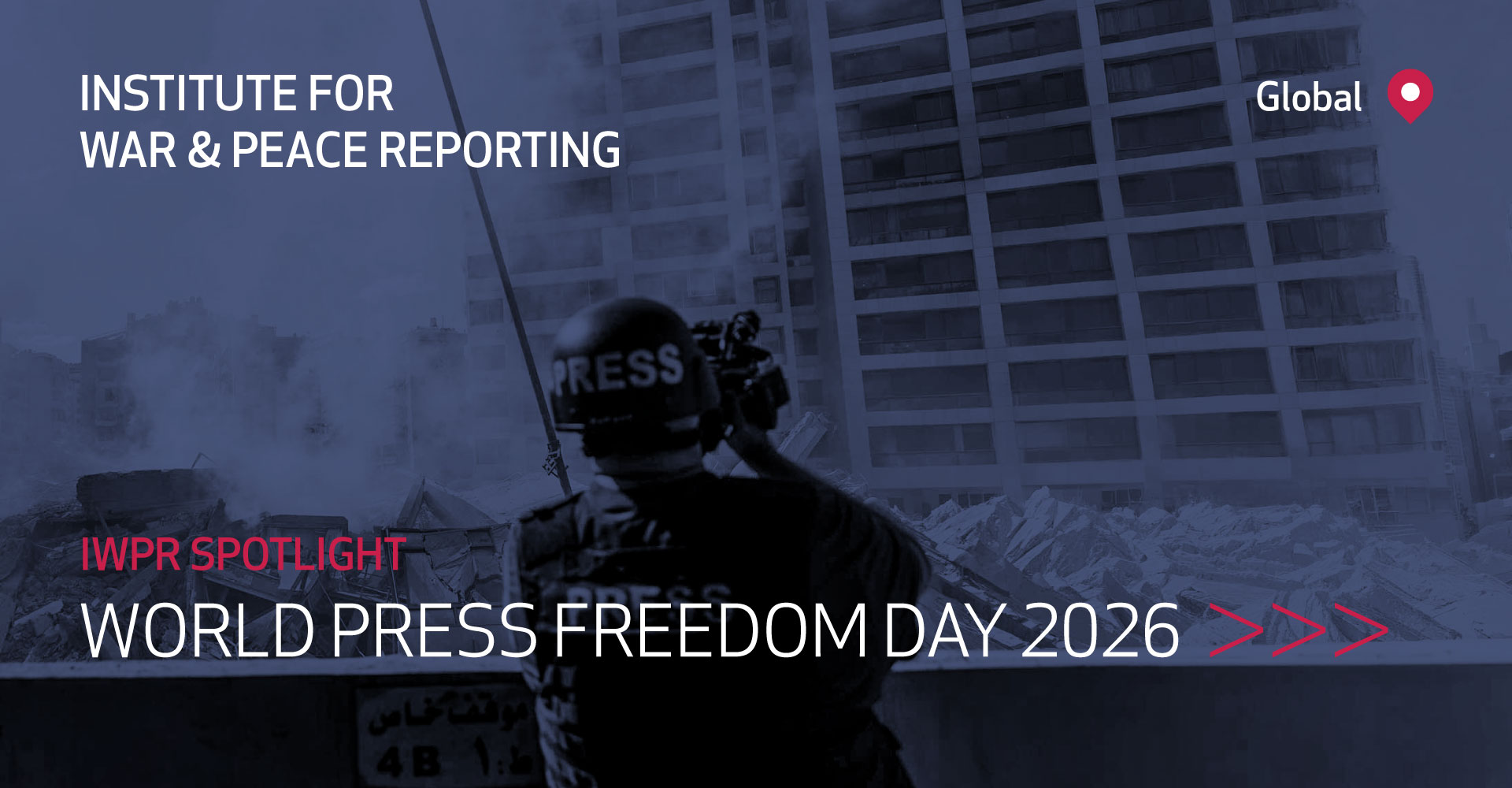
This period marks one of the longest internet shutdowns in Iran’s history since widespread internet use began, and it poses a serious threat to citizens’ safety and right to life. Iranians have been unaware of evacuation warnings due to internet shutdowns, and families abroad have been unable to contact their relatives because of disrupted international phone lines into Iran. These are only fragments of a broader systemic breakdown.
The restriction of access, typically justified on security grounds, has crippled the country’s core communication infrastructure. Even access to official domestic news outlet was extremely difficult, especially in the early days of the war. These restrictions have also taken on new forms. For example, after it was reported that Ali Khamenei’s wife had been killed in the attacks, no image of her could be found due to limited internet access. This led many media outlets to mistakenly publish photos of other individuals.
“The only available information is what authorities officially release.”
As the war continued, officials showed no hesitation in keeping the country cut off from the global internet while rolling out a domestic intranet known as the National Information Network. This restricted system provides limited services, such as access to domestic websites, banking, local messaging platforms and state television, even when international connectivity is severed.
Individual journalists took it upon themselves to overcome the constraints on the flow of information. These efforts included attempts to document events through Telegram channels, personal Instagram pages and media outlets’ social accounts. In addition to carrying significant security and legal risks during wartime, these efforts also imposed heavy financial costs.
The YouTuber Who Smuggled His Videos Out of Iran
The Iranian government has provided some journalists with so-called white SIM cards, which allow access to the global internet. The government's goal is to amplify its own viewpoints and promote narratives that it deems useful for propaganda. However, using such SIM cards comes with considerable reputational costs. Some journalists use them to publish on their outlets' social media platforms, while others forgo them altogether and purchase expensive configurations to access the internet and pursue their own topics of interest.
Because of the scarcity and high cost of these configurations, one Iranian YouTuber had a relative traveling overland take videos recorded during the war out of the country. He then shared the login details to his YouTube account and asked that the videos be uploaded on his behalf.
Meanwhile, others were forced to use domestic messaging platforms, which are considered insecure because their servers are accessible to authorities, to publish firsthand accounts of the war.
Severe disruption to the fact-checking process, regarding both military operations and human casualties, has made verification nearly impossible. The only available information is what authorities officially release. From the second week of the war onward, Iranian officials - likely seeking to obscure military casualties - adopted an unusual approach by reporting only the number of women and children killed or injured.
Information and psychological warfare escalated dramatically during the conflict, further complicated by the widespread use of artificial intelligence. Without internet access, distinguishing fabricated videos and images from authentic ones requires hours of effort and still does not always yield definitive conclusions. This challenge was evident in Israel’s claim that the spokesperson of Iran’s wartime command was fabricated. Iran denied the claim, but verification has remained effectively impossible for journalists due to mounting restrictions.
During armed conflicts, governments attempt to project their preferred narratives through selective reporting, exaggeration of successes and minimisation or denial of failures. Opposing sides counter with alternative narratives. The result is a proliferation of misinformation, fabricated accounts and misleading reports mixed with fragments of truth.
For instance, during the conflict, Iranian state television falsely claimed that US F-35 fighter jets had been shot down. Similar claims had been made during the 2025 12-day war, so independent media did not take this claim seriously. Eventually, the speaker of the Iranian parliament and a key political figure, Brigadier GeneralMohammad Bagher Ghalibaf, stated that there had only been an explosion near one of the jets and none had been downed.
Pressures on journalists and citizen reporters have also intensified significantly. In Iran, legislation such as the Law on Intensifying Punishment for Espionage and Cooperation with the Zionist Regime and Hostile States Against National Security and Interests have expanded the government’s capacity for repression.
The criminalisation of sending videos and images to foreign media outlets has made media activity more restricted and riskier than during the 12-day 2025 war. Authorities have already arrested dozens of Iranian citizens for sharing wartime footage with foreign media.
Using alternative communication tools, such as Starlink satellite equipment, may have legal consequences. Under laws passed last year, the Iranian government has provided for penalties up to and including the death penalty for using them. Although no such charges have been publicly confirmed yet, the judiciary has reported the arrest of individuals accused of using Starlink.
Consequently, many people refrain from sharing videos of events around them out of fear of arrest or prosecution. Citizen journalists, one of the most important sources of information in times of crisis, have largely been pushed out of the information sphere.
The press itself has also entered a state resembling paralysis due to these pressures, compounded by economic hardship. Some outlets, including two newspapers, have ceased operations, while major privately-owned media institutions have downsized and reduced output.
"Some media outlets have refused to pay March salaries,” the Shargh newspaper reported, adding, “One journalist, who asked not to be named, said they were given only one response, ‘We don’t have the money.’”
Nevertheless, private media outlets are striving to survive by any means possible in the hope that conditions may improve after these difficult days, despite facing severe economic hardship.
This war is simultaneously eroding fundamental pillars of press freedom: access to information, the ability to verify facts and the safety of journalists.