
Ukraine: “Russia Tries to Erase Our Stories”
As long as people’s voices are heard, I think we are bringing some justice.

Also see

Ukraine: “We Keep Going”
Not one generation of my family has escaped dispossession, deportation and war.

Ukraine: “Could I Have Done More?”
What resonates is the vulnerability and the sense of guilt that people struggle with, even those who have done so much.
The war began for me in 2013. We were sitting at the table in our office at Hromadske in Ukraine with the senior Ukrainian editors. The authoritarian government had just fallen. The revolution had won, and the new government was being sworn in, and we were writing an appeal to the new government to follow the promises of the revolution.
And then Russia invaded Crimea.
So the war started then, and our team at the Public Interest Journalism Lab have reported on it all this time.
A different fight started in 2022, and then, working on accountability and justice and recording war crime testimonies, we started to think; can we do something so that these stories won't be erased? Because Russia tries to erase those stories. And then my task was also to find the journalists who would be capable of recording the stories in a way that they stay forever. Could they become films, plays?
And that was the start of something new working with this very hard material, working with something we later called the Reckoning Project.
And we were joined by our international colleagues in this fight for justice.
I remember very well Olenna, the lady from Kramatorsk [who features in The Reckoning]. She really helped me to formulate the best idea of what we are doing, because Olenna is a very religious person. Our project is called The Reckoning, but she believes the only reckoning should be from God.
So I asked her, why did you talk to me? And she said, “My life is ruined, but I don't believe in revenge. I think the guys who did, the people who did it to my husband, they had to be stopped, so somebody's else life is not destroyed.”
And I think that is more important for me than the accountability.
So we have collected around 600 testimonies by now, and at least half of them are living under occupation and half managed to escape. Despite all this horror, I still think, in liberated Ukraine, life is still possible, even if we don’t have justice yet. But the war won't be over unless all those other 300 people will be able to return.
As long as people are talking, as long their voices are there, I think we are bringing some justice.
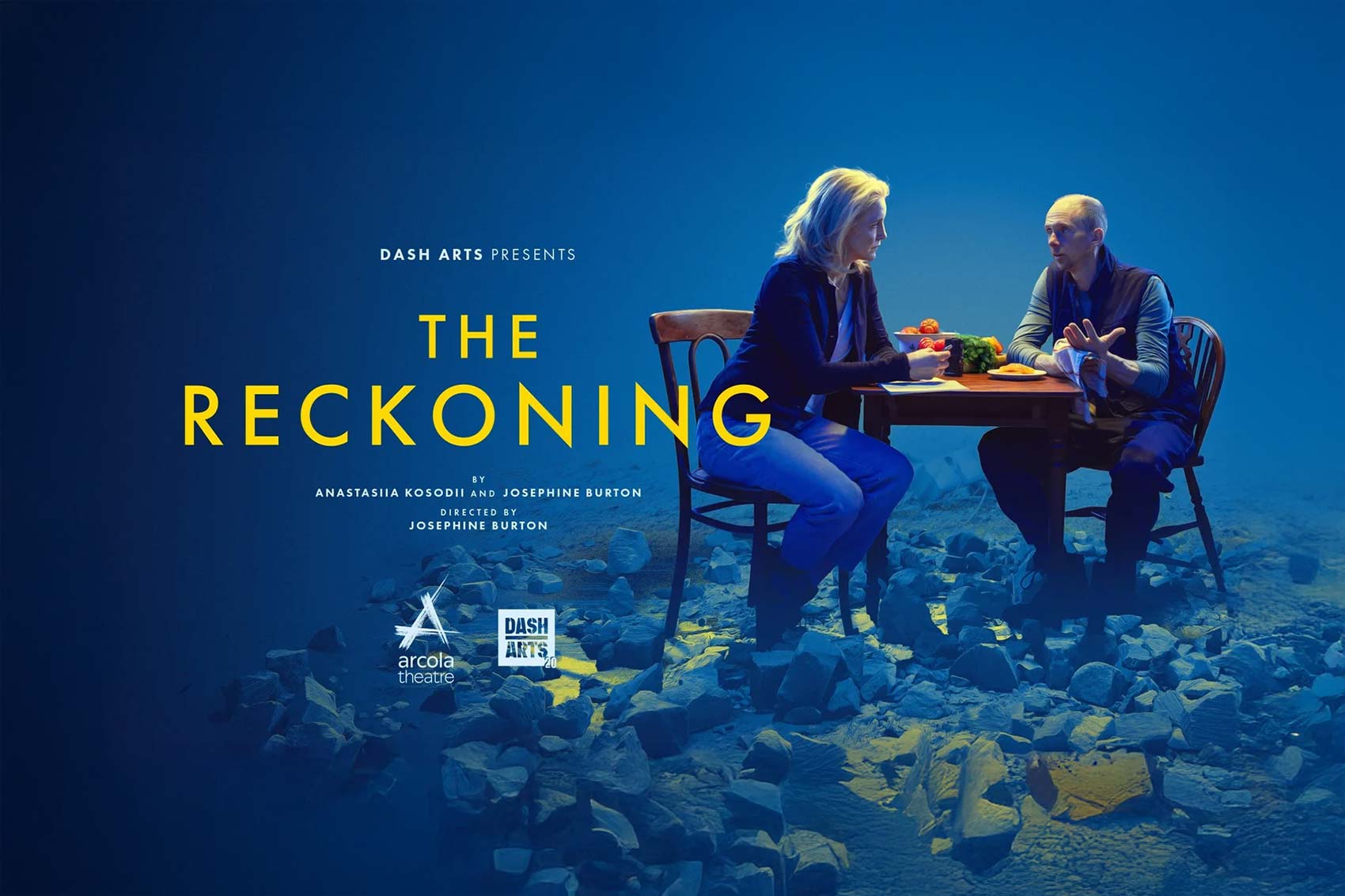
This is an edited version of Food for Thought, a series of talks given as part of Dash Arts' production of The Reckoning at the Arcola Theatre (May - June 2025). The Reckoning, a play based on witness testimonies from Ukraine gathered by The Reckoning Project.