
Ukraine: “Could I Have Done More?”
What resonates is the vulnerability and the sense of guilt that people struggle with, even those who have done so much.

Also see

Ukraine: “We Keep Going”
Not one generation of my family has escaped dispossession, deportation and war.

Ukraine: “Russia Tries to Erase Our Stories”
As long as people’s voices are heard, I think we are bringing some justice.
The war began for me, obviously, on February 24, 2022 at 4am, when I woke up in Chernivits in the west of Ukraine, where my family live.
Just before the full-scale invasion began, I was one of the very few people in my circle of colleagues, journalists and friends who believed that it actually might happen. Even as the Ukrainian government were dismissing the probability that Russia could launch a full-scale invasion of Ukraine, my confidence faltered.
So I collected my family and our cat and we went from Kyiv to Chernivits. I said, this will be just for a few days, we will be back soon. We just had a very small suitcase. And I was very anxious and very guilty. Why did I leave Kyiv? It's not going to happen, everything's going to be alright. All my colleagues and friends stayed.
I couldn't sleep normally. On February 24, I woke up as on previous nights at 4am, I checked the news and - the war had started. So I thought, okay, what can I do? I can't take my child back to Kyiv. I will try to make myself useful where I am in Ukraine, in this western part, which had not yet been bombed.
I decided, as a journalist, that I could be a voice for those people who could not tell their story. I would dedicate myself to answering all the media requests I got, use my social media, just raise awareness about what's going on.
And, since the family there had a big house, and I knew that a lot of my friends were in Kyiv or in the outskirts where all the heavy fighting was happening, I kept telling them, come here, we have space, we can host you, bring your kids, bring your pets.
So in a matter of a few days, our house was full. At some point, 20 people - with five cats, dogs, hamsters, children. We had huge meals, we'd all cook together - this sharing a meal, it's such a deeply Ukrainian way of showing that you love someone, that you care.
Those were really tough days, especially when Russians were encircling Kyiv, and we didn't know whether they would capture it or not.
What really resonates with me is the vulnerability and the sense of guilt that people struggle with, even those who have done so much; the journalists, the survivors, those who are documenting this war, those who are playing their part bringing Russian war criminals into account.
This is so familiar, because I always question myself, could I have done more? I eventually left Ukraine with my daughter and have been living in the UK for almost three years now. So there is always this question, am I doing enough? Am I doing all I can for Ukraine and for the Ukrainian people? But it is a very toxic feeling, so I try to take the inspiration from the people who on a daily basis continue making sure that Ukraine stands.
Russian war crimes were widely reported in the global media in the very first year of war. Ukraine might be less in the news now, but war crimes continue to happen day and night.
We have to keep reminding people outside of Ukraine that the war is ongoing, that Russia is the aggressor, Ukraine is the victim, and this war will not end unless the aggressor is brought into account.
There needs to be accountability for Russian war crimes, and there won't be a durable, sustainable peace in Ukraine unless that happens.
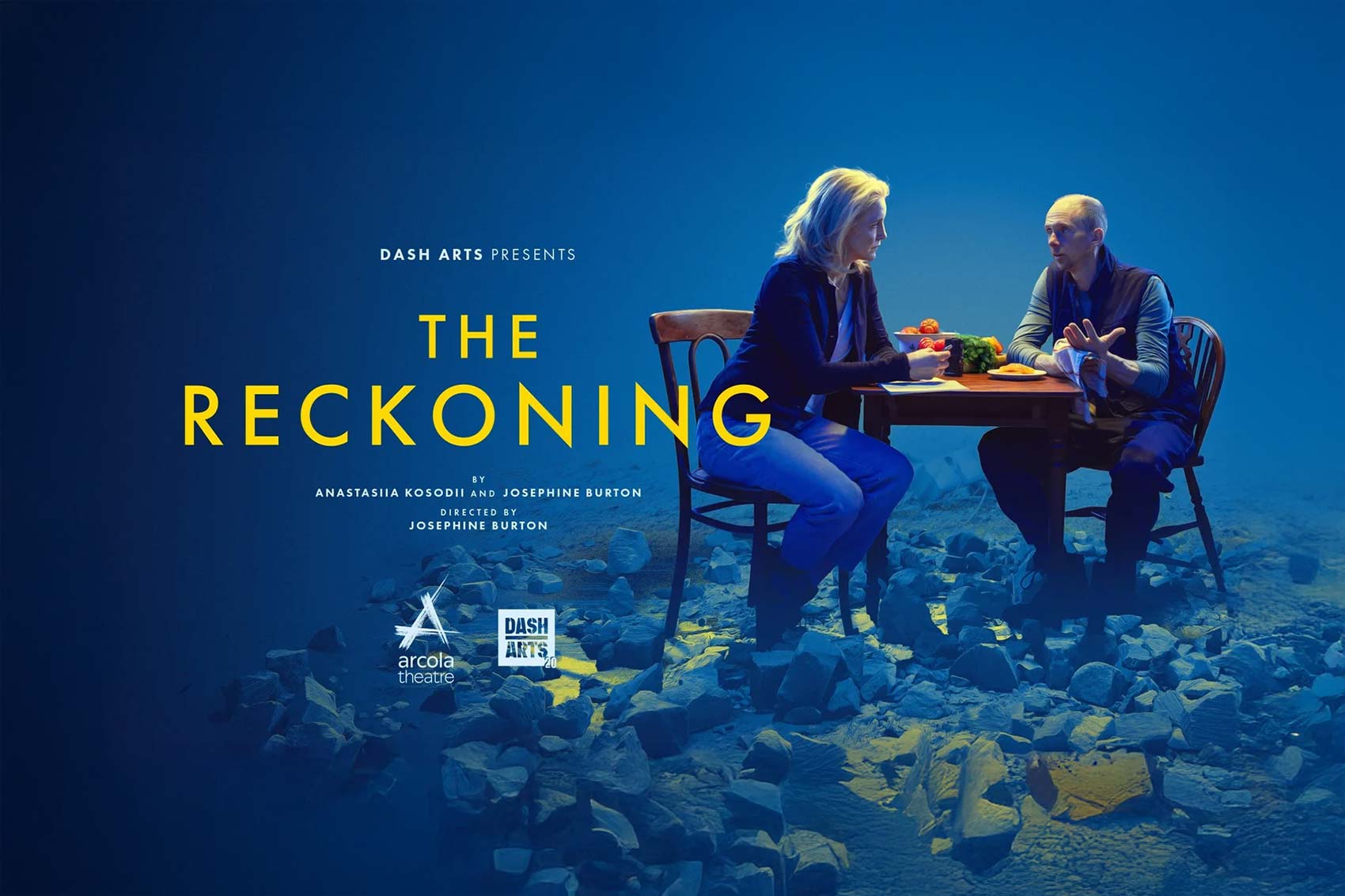
This is an edited version of Food for Thought, a series of talks given as part of Dash Arts' production of The Reckoning at the Arcola Theatre (May - June 2025). The Reckoning, a play based on witness testimonies from Ukraine gathered by The Reckoning Project.