
Ukraine: “My Only Goal Was to Survive”
One woman’s experience of enduring Russian captivity and pursuing her abuser through the courts.

Also see

Turkey: Plaiting As Protest
Women’s willingness to alter their hair in solidarity with those suffering violence is “an alternative method of writing history”.

“How Can There Be Peace Without Us?”
Conflict creates catastrophic, gender-specific crises, with women from minorities even worse impacted.

Mothers, Medics, Entrepreneurs: The New Face of Mosul
Economic empowerment fuels a new chapter for women in a city once ravaged by war.

Syria: Be Exceptional, or Be Invisible
In Syria as elsewhere, women are granted dignity selectively.

Kazakhstan: “I Was Treated Like Property”
Civil society campaigns for a clear legal definition of sexual harassment that would allow abusers to be held accountable.
Before Russia’s full-scale invasion, Olena Yahupova led a stable life in the small town of Kamianka-Dniprovska in the Zaporizhzhia region. She had her children, a job at the local public service centre and hobbies she loved – gardening and raising poultry. But everything changed in February 2022.
“When the Russians occupied the town, they set up checkpoints, placed military equipment on the main streets and imposed passport controls,” Yahupova recalled. “People would ask what was happening and they would say, ‘We’re here to make sure you live well.’”
On October 6, 2022, Russian soldiers showed up at her home. Among them there was a Russian Federal Security Service (FSB) officer Yan Zanevsky.
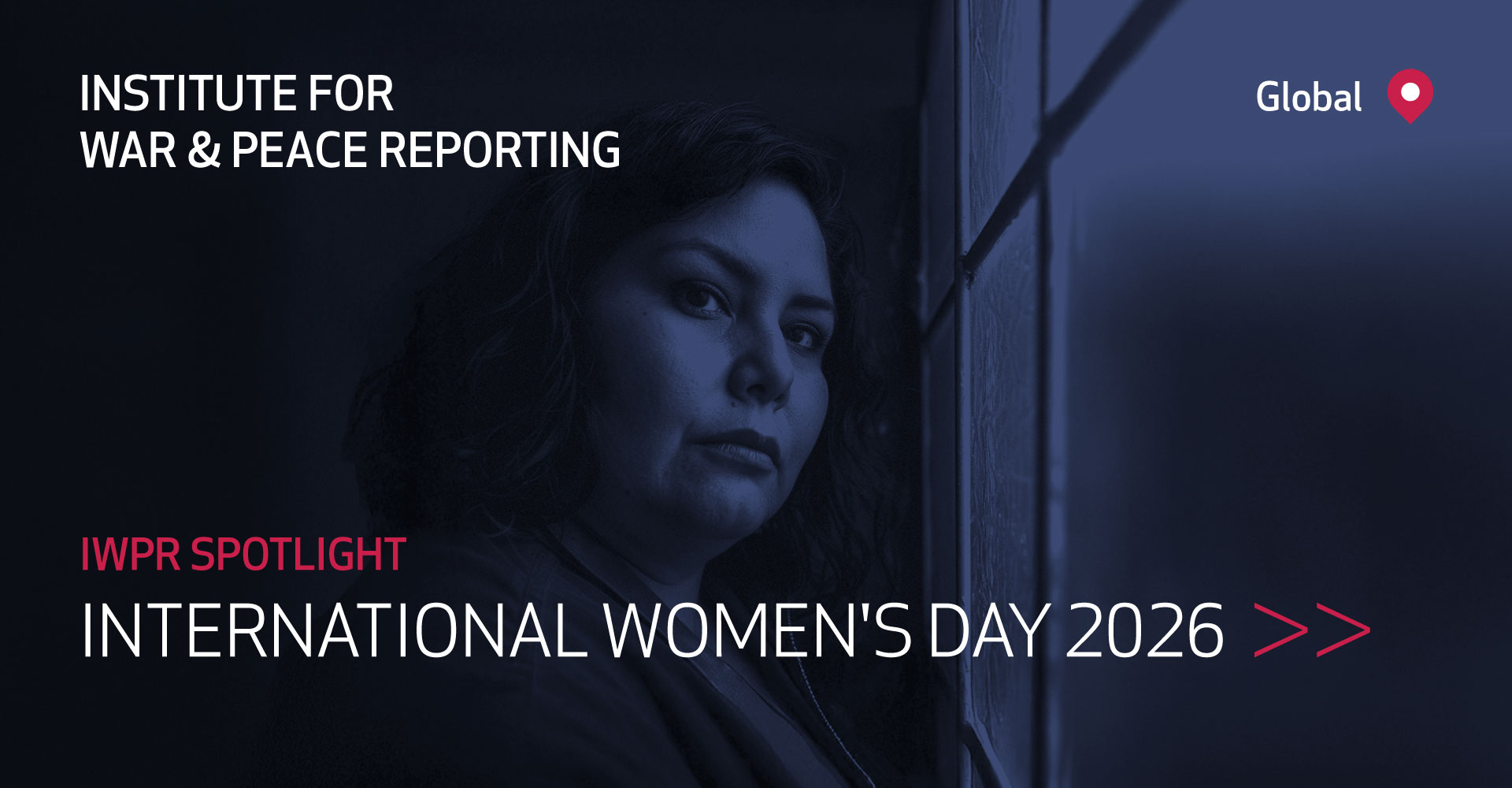
Because Yahupova’s husband was serving in the Ukrianian army, she had been deemed “disloyal”.
“Zanevsky was in charge of identifying the families of those who serve,” Yahupova said.
She was detained and taken to a police station, where Zanevsky brutally questioned her, demanding information about her husband and other pro-Ukrainian residents. The following day, having found a Ukrainian flag during a search of Yahupova’s home, Zanevsky stepped up his abuse.
During interrogations, he beat her on the head and tortured her by pulling a plastic bag over her head to suffocate her.
A week later, in a supposed confession to Russian journalists, she was forced to say that she had been reporting the locations of infrastructure facilities to the Ukrainian armed forces. Zanevsky kept his weapon aimed at Yahupova while the video was filmed.
She was subsequently transferred to a temporary detention centre in the village of Velyka Bilozerka, where she endured months of freezing weather, inadequate food and psychological abuse, as well as being denied medical care.
In January 2023, she and two other Ukrainian captives were taken to a Russian military position near the village of Verkhnia Krynytsia in the Zaporizhzhia region for forced labour. Upon arrival, they were told, “It’s time to work for the good of the Russian Federation.”
Yahupova endured grueling labour and was subjected to abuse, including sexual violence. She recalled instances where Russian soldiers would execute Ukrainians and then force other captives to bury the bodies.
"You’d wake up in the morning and your only goal was to survive until the evening. If you did, thank God,” Yahupova said. “The Russian military could shoot you and face no consequences for it.”
Yahupova was sent home to Kamianka-Dniprovska in mid-March 2023, but fearing for her life she soon fled.
When she finally reached safety, she reported her ordeal to the police, who opened an investigation into her case.
In 2025, a Zaporizhzhia court convicted Zanevsky for violating the laws and customs of war, sentencing him in absentia to 12 years in prison and partially granting Yahupova’s lawsuit for material damages.
The Bounds of Law
Zanevsky’s trial, like the vast majority of such cases in Ukraine, was carried out in absentia.
According to the prosecutor general’s office, courts have handed down nearly 200 such judgements since the start of the full-scale invasion, compared to just 20 in-person convictions.
But the experience can not only be frustrating for survivors who want to see their abusers imprisoned, but also legally fraught as convictions must be watertight to avoid the possibility of subsequent challenge.
“I have a very negative impression of the trial,” Yahupova said. “The judge would ask, 'So, he was beating you. What did he want from you?' I said I thought he wanted to kill me. And the judge replied, 'But he didn't kill you, did he?'”
She said that she was also dissatisfied with the court’s decision regarding compensation. Of the 28 million hryvnias (650,000 US dollars) Yahupova claimed for her losses, the court awarded some 8,000 hryvnias (185 dollars) due to a lack of documents confirming medical expenses and property loss. However, the court fully granted her claim for moral damages, awarding her over five million hryvnias (115,000 dollars).
And crucially, Yahupova continued, she had hoped that her attacker would receive a life sentence.
However, Iryna Kapalkina, the lawyer who represented her, noted that the court had imposed the maximum possible sentence for the crime.
“Survivors want the maximum punishment for the accused, but the court must operate within the bounds of the law and the available evidence,” she said, noting that three other cases recognising Yahupova as a victim were currently pending.
As for financial recompense, Kapalkina explained Yahupova would be be able to use the compensation ruling to file a future claim with the Register of Damage.
“A claim can be filed in separate proceedings or a lawsuit can be brought against the Russian Federation,” she said. “Mechanisms may be created to compensate for the value of lost property. Furthermore, there is a register of damage that also provides an opportunity for reimbursement.”
Such trials are rarely straightforward. For Ukrainian verdicts in absentia to be recognised and enforced abroad, they must meet all standards for the right to a fair trial.
Andrii Yakovliev, a lawyer at the Media Initiative for Human Rights, said that verdicts must meticulously detail how the court concluded that the accused was, in fact, the person who committed the crime.
“This applies, for example, to providing a detailed description of the identification procedure in the verdict,” he continued, adding, “With a barrier-free appeals system and easy access to information, Ukraine could shield itself from accusations that its convictions violate the right to a fair trial. That would resolve the issue of ensuring defendants are properly notified.”
Onysiia Syniuk, an expert at the ZMINA Human Rights Centre, added that it was essential that the trial process be adversarial.
“Even when the accused has a lawyer from the Free Legal Aid Centre, it doesn’t always guarantee a full defence, because the lawyer can’t establish their client’s position if there’s no contact,” she noted.
The prosecutor general’s office noted that to date, no individuals convicted of war crimes in absentia had been detained. However, it also emphasised such trials were important for survivors, noting that delaying justice in these cases would be tantamount to denying it.
“For the survivors, this is a response to the harm they have suffered,” Syniuk agreed. “A court hears the case, even without the accused present, and officially recognises that a crime was committed against them and that someone is accountable for the offence.”
She continued, “We also need to talk about memorialisation, which isn’t about court verdicts, but about acknowledging that people are victims. For many, this is crucial.
“We have to be frank with the survivors: not every perpetrator will be convicted and we won’t be able to ensure every accused person serves their sentence.”
Yahupova said that her quest for justice was not satisfied by the verdict against Zanevsky, but that she had not lost hope and planned to continue the fight. She now advocates for the release and rehabilitation of Ukrainian civilians, striving to help those still imprisoned.