World Press Freedom Day
In this week’s update, read about how reporting survives–and can even flourish–under repressive regimes.
Also see

Iran’s Digital Darkness
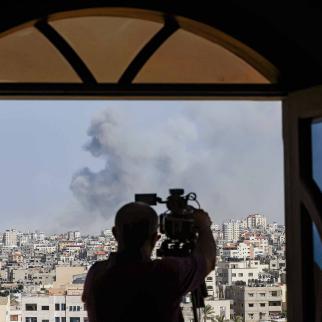
“This war is simultaneously eroding fundamental pillars of press freedom: access to information, the ability to verify facts and the safety of journalists.”

Independent Journalism in Cuba: It’s Illegal – But It Happens
Improvised newsrooms are beginning to take shape: a phone, a notebook and someone willing to tell the world what is happening.

Exiled Myanmar Media Keep Reporting Alive
The junta has systematically dismantled press freedom by arbitrarily arresting, jailing and even killing reporters as well as imposing internet shutdowns.

Myanmar: “We Continue Reporting the Junta’s Abuses”
Hybrid media outlet uses mix of diaspora staff and citizen journalists to report on events in Shan state.


Ukraine: On the Frontline of Trauma-Sensitive Reporting
Journalists play a vital role in protecting human dignity and upholding human rights overall through survivor-centered reporting.

Egypt: Success at a Double Cost
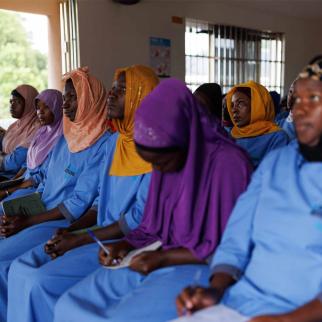
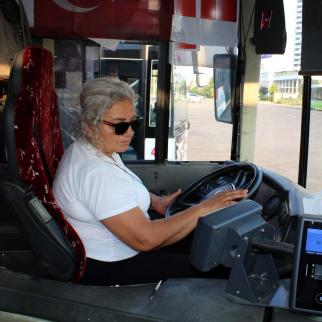
Women journalists carry an extra burden to prove their competence.
World Press Freedom Day
In this week’s update, read about how reporting survives–and can even flourish–under repressive regimes.

Welcome to IWPR’s Frontline Update, your go-to source to hear from journalists and local voices at the front lines of conflict.
THE BIG PICTURE
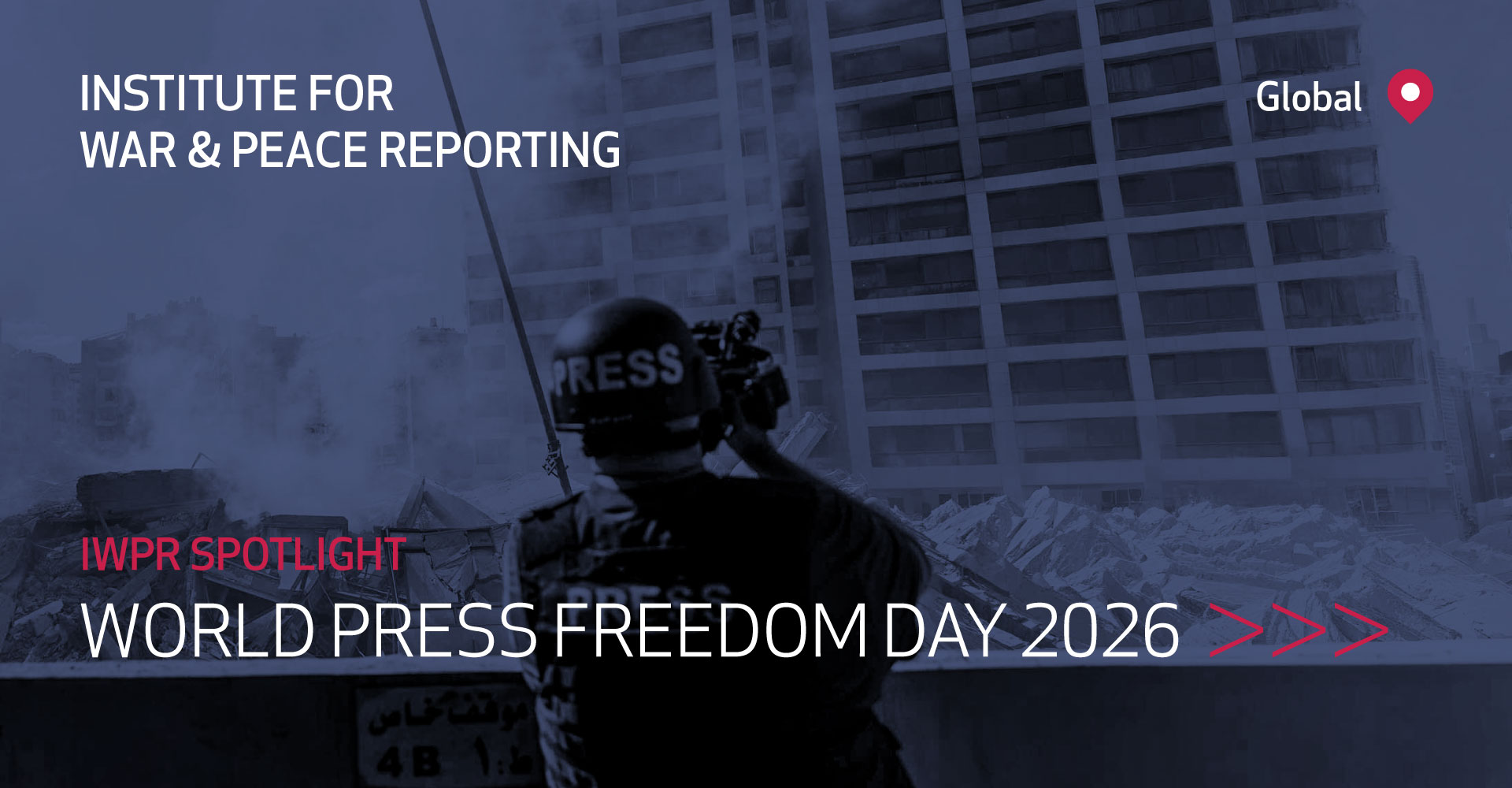
Across the world, journalism continues under conditions designed to silence it. On World Press Freedom Day 2026, IWPR explores how journalists operate within these constraints to publish stories despite state control.
VOICES FROM THE FRONTLINE
“The US-Israel war against Iran has produced unprecedented and harrowing restrictions on the flow of information within the country,” wrote Faramarz Dabir, the pseudonym of a journalist inside Iran, noting that despite fierce repression, citizens were still valiantly trying to get the story out.
One Iranian YouTuber, he recounted, had even smuggled footage recorded during the war out of the country to be uploaded on his behalf.
Even in the face of censorship, surveillance, legal threats and violence, the flow of information rarely stops. Instead, it adapts.
“Amid growing authoritarianism, journalists and news outlets in the world’s most repressive environments are becoming ever more innovative,” IWPR Managing Editor Daniella Peled and MENA Country Director Nadia Samet-Warren wrote this week, emphasising the unique role of hybrid media.
They highlighted IWPR partners finding ways to overcome these barriers: from FOCOS media investigating regime abuses in El Salvador to the women-led Zan Times documenting violations in Afghanistan and the Jummar outlet telling untold stories from Iraq.
“Exiled journalists are in a unique position to challenge regime narratives, often working with activists and other journalists on the ground, acting as a bridge to share information and provide training and support to report from high-risk zones,” they wrote.
WHY IT MATTERS
When journalists are constrained by censorship, intimidation and state control, entire stories can be lost, especially those affecting marginalised groups.
Kham Phu, a member of Myanmar’s Shan minority community, is chief executive officer of the Shan Herald Agency for News, a hybrid outlet now based in Chiang Mai, Thailand.
He described the huge repression since the 2021 military takeover, adding, “We will continue telling the stories on the junta’s abuses and hardships of our people despite the huge risks. I hope the international community won’t forget us.”
THE BOTTOM LINE
Press freedom under repression is not an abstract principle. It directly affects the quality, diversity and reliability of information worldwide.
And the bravery and ingenuity of local voices working in often unimaginable conditions pays off.
“The Cuban people have largely lost their fear of - and deference to - the regime,” Jorge Enrique Rodríguez, a journalist for independent outlet Diario de Cuba, told IWPR, explaining that digital media and grassroots reporting meant that citizens no longer felt isolated and unheard.
“This would have been unthinkable ten years ago, when calling oneself an independent journalist was almost like invoking a curse,” he continued. “The regime’s campaigns to demonise independent journalism no longer work.”