Ukraine: Why Mental Health Matters
How psychological support is helping Ukrainian journalists navigate war's horrors and carry out essential work.
Also see
Investigating Crimes Against Ukrainian Journalists
NGOs and prosecutors log hundreds of cases of aggression, intimidation and attacks on media workers.

Ukraine: “The Gravest Attack on Freedom of Speech”
As Russia targets media workers in Ukraine, their fellow journalists fight back for justice.

How Investigative Journalists Can Support Justice
Open source and undercover work helped a team from the Suspilne media outlet identify a suspect in a notorious case of the abuse of civilians.
Ukraine: Why Mental Health Matters
How psychological support is helping Ukrainian journalists navigate war's horrors and carry out essential work.

Welcome to IWPR’s Frontline Update, your go-to source to hear from journalists and local voices at the front lines of conflict.
THE BIG PICTURE
As the war in Ukraine nears its fourth anniversary, the country’s journalists continue to tirelessly report on Russia’s full-scale invasion.
But the relentless pressure takes its toll. Constant exposure to trauma risks severe psychological damage and eventual burn out.
VOICES FROM THE FRONTLINE
“While most people flee from scenes of traumatic events, journalists are among the few who rush to the epicentre,” said Anastasia Nizhnik, coordinator of the Mental Support for Media programme at the Suspilnist Foundation and co-founder of the BrainCult Centre. “Being a journalist in a war zone is particularly challenging. The main consequences of war are chronic fatigue, emotional exhaustion, sleep disorders, and psychosomatic disorders. Without support, these can lead to further complications.”
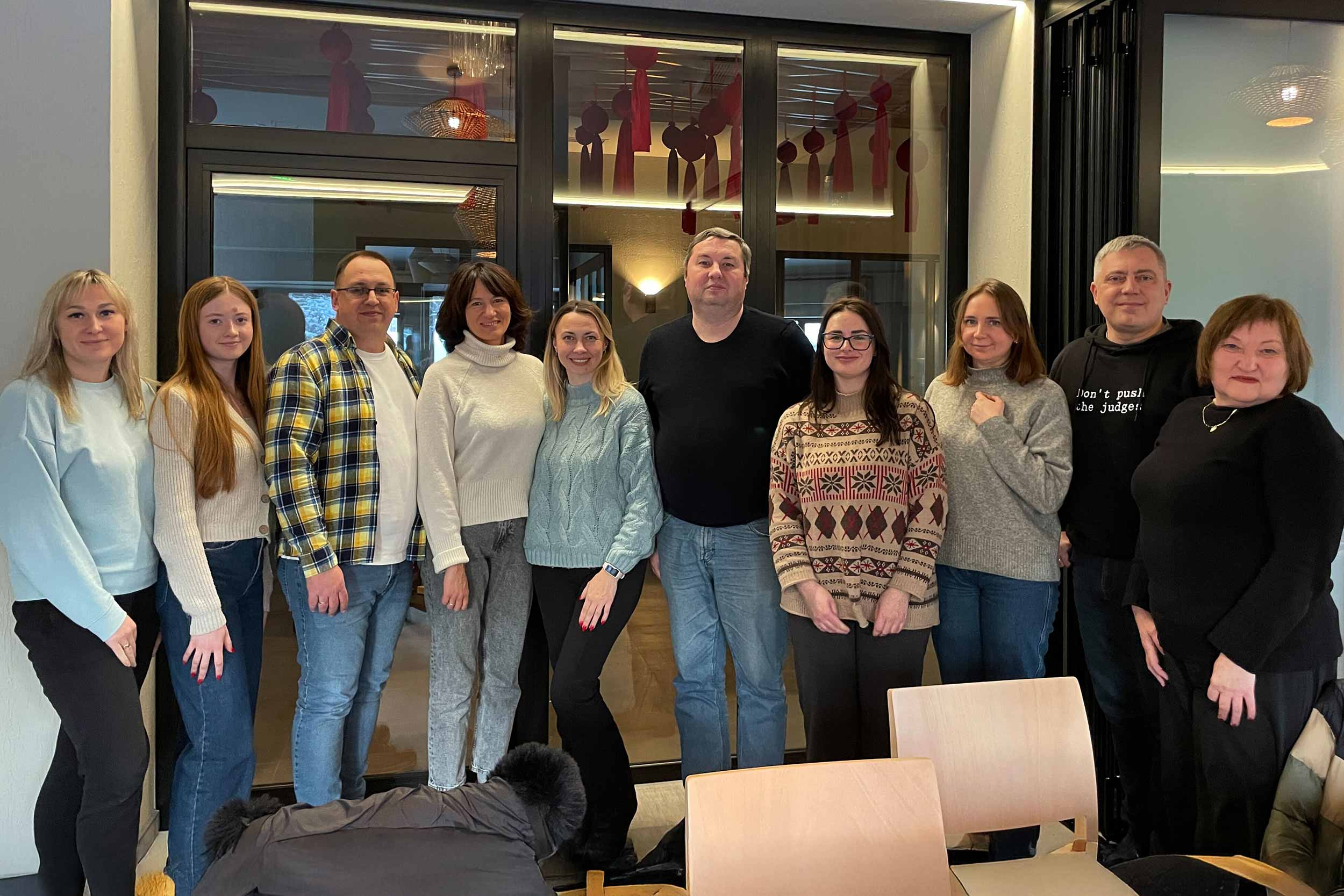
Last weekend, IWPR held a two-day retreat for Ukrainian journalists working on our justice reporting project, which provides in-depth coverage of judicial processes taking place across the country as well as dedicated international analysis.
A dozen participants, team members and trainers met in a quiet village in Kyiv region to explore ways to build psychological resilience and develop self-care skills in challenging professional situations.
"During the training I felt real joy in learning together with like-minded people how to take care of ourselves, slow down the pace of life, and reduce anxiety, even if only a little,” said Ukraine Justice editor Olga Golovina.
“The exercises offered by the psychologists may seem simple and basic at first glance, but they are effective. It was important for everyone to share their thoughts, feel supported, spend time in beautiful nature, warm up by the fireplace, eat good food - to live, even briefly, the normal life we had before the war.”
WHY IT MATTERS
The role the media plays in documenting human rights abuses and ensuring accountability is vital for any society experiencing conflict, and local journalists suffer the trauma of war alongside and amidst their own communities.
“Caring for the mental health of media workers is extremely important today,” said Nizhnik. “It is not just a display of humanity, but a matter of national information security because a journalist's psychological state affects their ability to resist disinformation, remain level-headed, interact with people who have survived traumatic experiences and remain calm and accessible for a wide audience, especially in times of war.”
THE BOTTOM LINE
IWPR has been working in Ukraine since 2014, with programming designed to support and develop a strong cadre of independent media voices amid the impact of Russian aggression.
They can only carry out this work with the right tools - whether equipment, training or psychosocial support - that will enable them to navigate their essential task. Sustainable peace is an impossible prospect without their contribution.