
Why I’m Angry On International Women’s Day
Beyond the panels, hashtags, and polished statements, the lives of frontline activist are at risk.

Also see

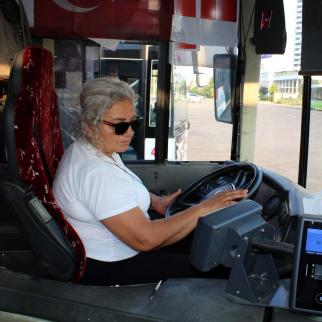
Syria: Be Exceptional, or Be Invisible
In Syria as elsewhere, women are granted dignity selectively.

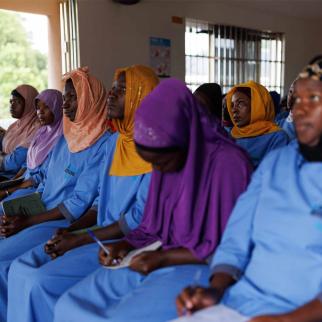
Mothers, Medics, Entrepreneurs: The New Face of Mosul
Economic empowerment fuels a new chapter for women in a city once ravaged by war.

Ukraine: “My Only Goal Was to Survive”
One woman’s experience of enduring Russian captivity and pursuing her abuser through the courts.

Turkey: Plaiting As Protest
Women’s willingness to alter their hair in solidarity with those suffering violence is “an alternative method of writing history”.

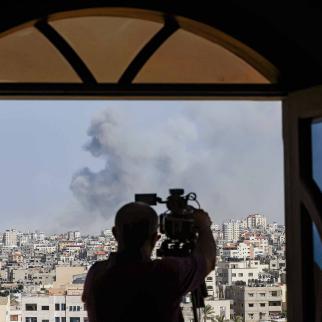
“How Can There Be Peace Without Us?”
Conflict creates catastrophic, gender-specific crises, with women from minorities even worse impacted.

Kazakhstan: “I Was Treated Like Property”
Civil society campaigns for a clear legal definition of sexual harassment that would allow abusers to be held accountable.
I am angry. I am not “disappointed.” I am not “concerned.” Angry. Because once again, a woman who spent her life defending other women has been murdered for it.
Last week, Yanar Mohammed - one of Iraq’s most prominent feminist activist, human-rights defender, and a leading figure in the Organization of Women’s Freedom in Iraq (OWFI) — was shot dead outside her home in Baghdad.
This was not an isolated case. Mohammed’s murder was part of a pattern: the backlash against women who refuse to be quiet - women who expose abuse, challenge corruption, defend marginalised communities and insist that equality is not negotiable. Worldwide, women human rights defenders face increasing violence and threats, including misogynistic, gendered hate that aims to push them out of public life.
These are some of the other figures killed in the last year alone.
Pamela Mabini (South Africa)
A community activist and whistleblower who supported survivors and spoke out publicly about abuse and impunity — including sharing information that helped advance accountability in a major case. She was shot and killed outside her home in Gqeberha on March 7 2025.
Ali Jejhon Macalintal (Philippines)
A transgender rights activist and radio commentator who used her platform to defend human rights. Despite spending eight years in police detention before being acquitted in 2010, she continued her activism with the rights group Karapatan in Mindanao. She was killed in an apparent targeted shooting in General Santos City on 23 June 2025.
Iftehan Al-Mashahri (Yemen)
A women’s leader and public official in Taiz, she was an activist and member of the Wahag Women’s Hub. She supported other women leaders and pushed for women’s inclusion in civic and peace processes. She was assassinated on September 18 2025 when gunmen opened fire on her car.
This is, sadly, not an exhaustive list of violence against women environmental, indigenous and human rights defenders in the last year. These killings aren’t random violence. They are political acts. They are intended to send a message to feminist activists: If you speak up, you could be next.
Over the years, our global research on violence against women in politics reveals common trends across nations and cultures. The most common truth is that violence against women in political and public life is not usually about removing one individual. Violence against women activists is personal, vicious and designed to traumatise others. Women activists are attacked not only for what they do, but for who they are. They face dangers that are unequivocally gendered: rape threats, attacks on their children, smear campaigns, insults intended to humiliate and punish them. In 2019, Canada’s Environment Minister was verbally assaulted in public, when out with her children. Usually the objective of violence against women activists is to terrorise them out of public speech, leadership and dissent.
Violence against women in public life has a chilling effect that statistics alone do not capture. When a woman activist is harassed, disappeared, or killed, other women are forced to calculate the cost of their own actions and speech. In addition to their own safety, they calculate the risks of their activism to the safety of their families, colleagues, and communities. Our research shows that women in public life often take extraordinary precautions while engaging in public duties or speaking out. One woman member of parliament in Canada told me that she has a “panic button” in her bra. Many women activists decide that it is too dangerous for them to run for office, organise campaigns, expose abuse or publically advocate for indigenous, labour, environmental or human rights. That silence is not accidental. It is encouraged through fear.
The fear is politically useful to many. It closes civic spaces, weakens women’s rights organisations and protects the institutions and systems these women challenge. Every unanswered killing, every ignored threat, every offline and online intimidation tells women activists that participation comes with a punishment that men in public life rarely face in the same way. The result is not only the loss of lives, but also the loss of leadership, voices, community action, and strategies that create vibrant and equal societies.
Every time investigations fail, perpetrators escape accountability, and institutions treat women rights defenders as expendable, the real casualties are democracy and equality.
International Women’s Day is full of panels, hashtags, and polished statements. But for women on the front lines of rights work, the cost of advocacy can be their lives.
So here’s what I want to say plainly:
Stop romanticising women’s courage while tolerating the systems that punish it.
Stop celebrating “empowerment” while women activists are hunted.
Protection, accountability, and justice are not optional extras — they are the bare minimum.
Don’t look away. Name what this is: a backlash against women activists — because they are women — and a deadly one.