El Salvador: Anatomy of a Siege
Read about the devastating impact of El Salvador president Nayib Bukele’s repressive policies on the country’s civil society and media.
Also see

El Salvador: Leaving to Survive, Staying to Resist
We speak to journalists and defenders of human and environmental rights about how their lives have come under threat.

The Unseen Victims of El Salvador’s Crime Crackdown
IWPR backs journalists in El Salvador amid extreme restrictions under Bukele's state of exception.
El Salvador: Anatomy of a Siege
Read about the devastating impact of El Salvador president Nayib Bukele’s repressive policies on the country’s civil society and media.

Welcome to IWPR’s Frontline Update, your go-to source to hear from journalists and local voices at the front lines of conflict.
THE BIG PICTURE
President Nayib Bukele’s hardline policies, championed as a means to crack down on organised crime, have catastrophically impacted the El Salvador’s civic space.
Now in its fourth year, his repressive state of exception has affected all sectors from independent media and rights activists to anti-corruption investigators and indigenous communities.
VOICES FROM THE FRONTLINE
“I left so I that I can keep speaking out,” said Angélica Cárcamo, director of the Central American Journalists’ Network, one of dozens of media workers who fled after a Foreign Agents Law targeting reporters and civil society took effect.
“The price of returning to El Salvador is silence – or knowing that at some point, the police will knock on your door.”
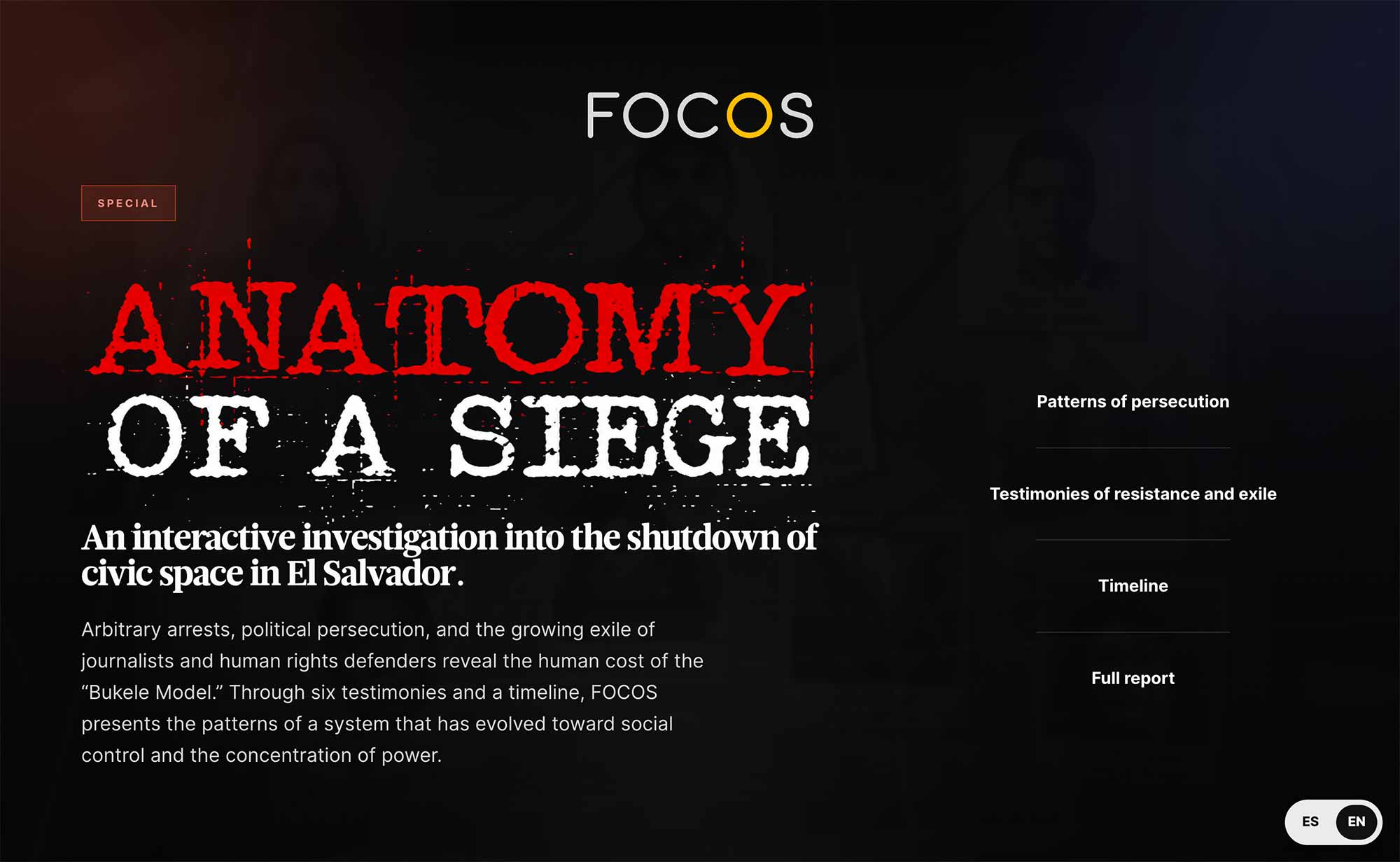
The data-driven report by FOCOS, a Costa Rica-based regional investigative outlet, documents the state tactics—including repressive laws, surveillance, smear campaigns and harassment—that have driven people into exile. Funded and coordinated by IWPR, this international publication appears in Spanish via FOCOS, and in English via openDemocracy.
For human rights lawyer Ivania Cruz, the decision to leave “was not heroic, but the only one possible”. Having been granted political asylum in Spain, Cruz continues to be targeted for her work in documenting human rights abuses back home.
“If those who report leave and stop speaking, the official narrative goes unchallenged,” she said. “The task now is to leave no voids, to document from wherever we are.”
WHY IT MATTERS
This extended report is part of a new IWPR programme supporting impact-focused investigations around the world. It is published in partnership with international independent media platform openDemocracy as well as regional outlets including Intermedios, a coalition of 18 independent Salvadoran media operating in exile.
The data-driven investigation, which includes an interactive video timeline illustrating the rise of abuses since Bukele came to power, not only highlights the human impact of authoritarianism but also provides campaigners with key resources to continue to drive change.
THE BOTTOM LINE
At a time when falsehoods spread fast, trust is fragile and civic space is shrinking, reliable information, especially from reliable local reporters in conflict-affected environments, is crucial to ensure public awareness and successful advocacy.
Upcoming stories under IWPR’s impact reporting project include investigations from Afghanistan, Syria and Sudan, combining rigorous reporting by local journalists with direct public engagement and collaboration with trusted media partners.
Supporting local voices of media and civil society to report and engage is at the core of IWPR’s mission: giving voice and driving change.