
Ukraine: Justice Is More Than a Court Verdict
While legal processes are important, people also need official – and practical - recognition of what they have been through.

Also see

Civilians Freed from Russian Captivity Struggle for Status
Currently legislation has no provision "for people who are simply seized off the street and imprisoned”.
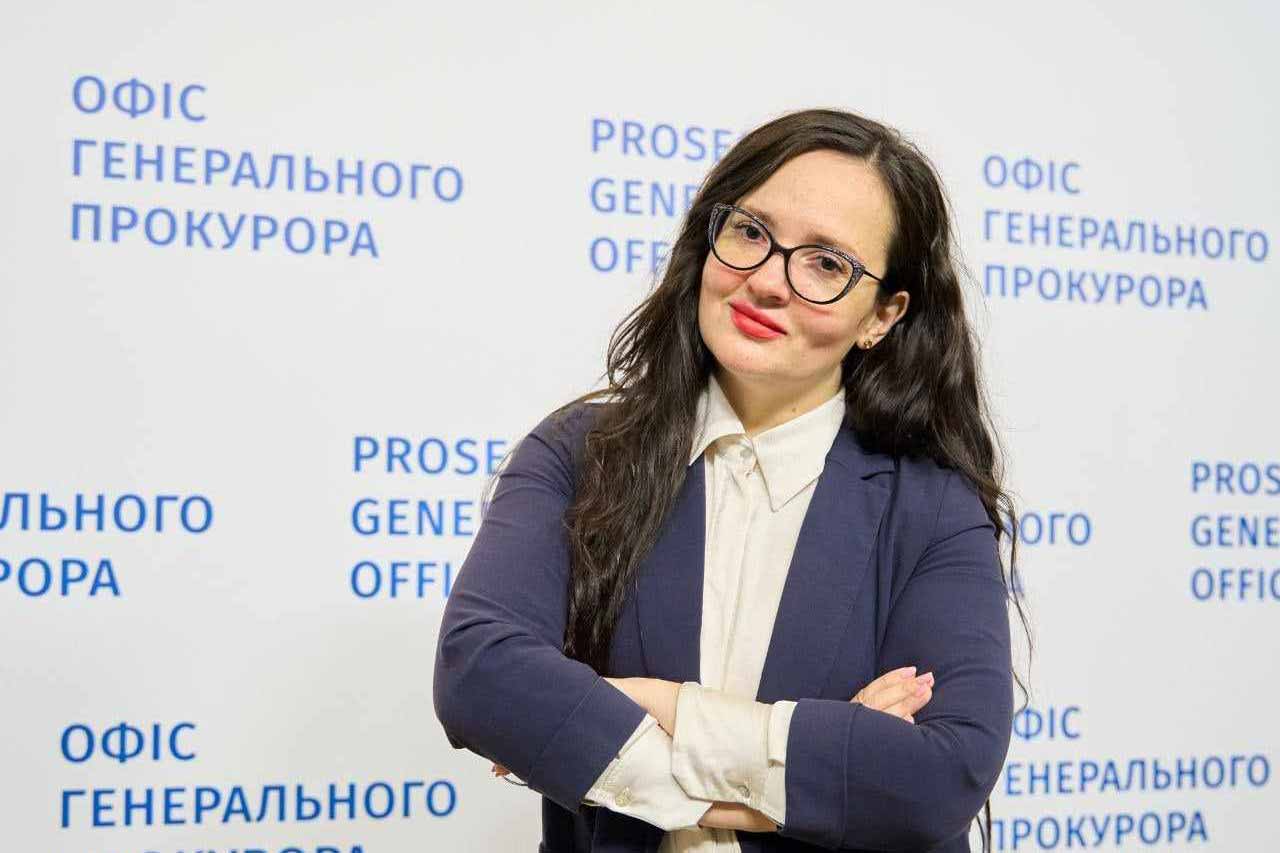
The work of the legal system provides only partial justice for victims of war crimes, with recognition, compensation and remembrance also important components of the process. Veronika Plotnikova, head of the Coordination Centre for the Support of Victims and Witnesses at the prosecutor general’s office of Ukraine, told IWPR’s Olga Golovina that updated legislation, better communication and inter-agency cooperation were crucial in helping meet their needs.
Olga Golovina: Ukraine is investigating war crimes on an unprecedented scale, yet victims’ needs extend far beyond criminal justice. What is the gap between the work of the justice system and people’s real-world expectations?
Veronika Plotnikova: The greatest disconnect is that victims often feel they only matter within the walls of a criminal courtroom. Outside of it, they are forced to prove their trauma over and over again to various agencies. This should be changed, at both the national and local levels.
While we have legislation and initiatives for specific groups – such as survivors of conflict-related sexual violence (CRSV), children returned from deportation, military and civilian torture survivors – we still lack a comprehensive legal framework. There is no unified roadmap for how to work with and assist victims of international crimes.
The Ministry of Justice is finalising its updated National Human Rights Strategy until 2035. For the first time, a state-level document will include a dedicated goal: protecting the rights of victims of Russian aggression and ensuring their reintegration. The key question is what measures are realistically achievable amid the ongoing war and with limited resources.
Ukraine’s justice system is operating in parallel with international mechanisms. While the International Criminal Court (ICC) has opened an investigation, its mandate is limited, leaving thousands of cases under Ukraine’s national jurisdiction. This creates a major disconnect: victims expect swift and visible justice - seeing Russians in the dock. The reality, however, is different. Most proceedings are conducted in absentia and war crimes investigations take years due to the complexity of gathering evidence, the need for international cooperation and the strict adherence to the rule of law. Furthermore, the lack of access to occupied territories severely complicates evidence collection and deepens the public’s sense of injustice.
Then there is the push for a special tribunal for the crime of aggression. For victims, this is crucial as it represents the path to holding Russia’s top political and military leaders accountable. But its creation is a protracted political process.
Managing the disconnect between the desire for justice and this reality hinges on honest communication. This means clearly explaining the long timelines, detailing efforts at home and abroad, and outlining the potential outcomes to foster realistic expectations. To that end, the prosecutor general’s office is finalising a 2026–2028 Strategy for Prosecuting International Crimes that designates victim communication as a specific goal – a priority also reflected in the national Rule of Law Roadmap.
In your experience, how is the definition of justice changing for victims? What’s more important to them today: a court verdict, compensation, recognition or something else?
For many victims, justice is not only about a court verdict. In more detail, the question of the dimensions and attitudes towards the content of justice was studied jointly with colleagues from the Media Initiative for Human Rights on the basis of focus groups of victims who had varied experiences with the state.
The main takeaway is that while a verdict is important, it doesn’t solve their day-to-day problems. People need official recognition of what they’ve been through – an acknowledgment that their suffering has been seen – and for that recognition to have a real, practical dimension. This could mean access to housing, social benefits, healthcare or employment. For many, these tangible steps are what provide a true sense of justice, because they restore the ability to move on with their lives.
The issue of compensation is also crucial. Victims are calling for the government to create a mechanism for reparations that is not dependent on the conclusion of criminal proceedings. For them, compensation is more than just money – it is an essential means to rebuild their lives after losses.
For many victims, justice also extends beyond punishing the perpetrators or receiving financial awards. It involves the proper preservation of memory, ensuring the events and the people lost are not forgotten. This includes memorialisation efforts – such as official days of remembrance, museums, monuments and educational programs. The key is that these initiatives should be shaped by the victims themselves, upholding the principle of “nothing about us without us”.
Do media outlets amplify victims’ voices or can they, conversely, expose them to further risks?
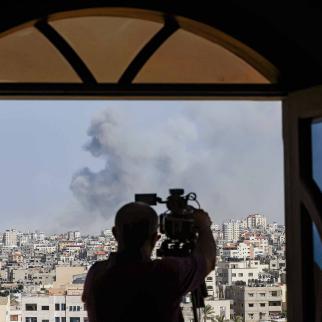
Journalists are essential for ensuring the issue of war crimes remains at the forefront of public discourse. Their work gives a platform to victims, reveals the sheer scope of the atrocities and helps exert pressure on the aggressor state and accountable international bodies. Without media coverage, countless stories would go untold and the public would be unable to grasp the full extent of these crimes.
It is vital that journalists create a platform for victims to speak. By conducting interviews, producing reports and creating documentaries, they empower individuals to recount their experiences. This process does more than just foster public support; it acts as a form of validation. When their story becomes part of the public conversation, victims feel that their suffering has been seen and acknowledged.
At the same time, journalists should navigate the inherent risks to victims' safety and mental health. Excessive detail or the publication of private information can inflict further trauma or expose them to new threats. These ethical considerations are particularly critical when covering sensitive cases, such as sexual assault or crimes against children.
A focus on emotional impact and audience reach can lead to the simplification of complex issues. For victims, this means their experiences are often portrayed superficially, lacking the necessary depth and understanding. This underscores the critical need to develop ethical standards for journalists covering war crimes. Such guidelines should include rules on confidentiality, avoiding re-traumatisation and training reporters in trauma-informed practices.
What impact will recent updates to the legal framework, including new directives for working with victims and witnesses, mean in practice?
In December 2025, the EU revised its Victims’ Rights Directive, a move with two major implications for Ukraine. Firstly, for the first time, it recognises victims of war crimes, torture and enforced disappearances as a particularly vulnerable group, granting them the right to access justice and support in EU member states. Secondly, implementing the directive is a key part of Ukraine’s EU accession commitments under Chapter 23.
Ukraine had already begun moving forward on this front, even before the directive was updated. The prosecutor general’s office has established a Coordination Centre for the Support of Victims and Witnesses, along with a network of regional units. Nine of these units are currently operational, with three more planned to launch in 2026 and they are already providing support to over 4,500 victims and vulnerable witnesses.
The mission of these units is to ensure every victim knows their rights, has up-to-date information about their case, receives psychological support and is referred to the appropriate services.
The next step is to enshrine these approaches in law. This includes the right to professional support, access to case information, trauma-informed investigative methods and protection from re-traumatisation. These standards should apply to all vulnerable victims, not just those of international crimes. A relevant draft law is being drafted in collaboration with the Ministry of Justice, NGOs and international experts.