After the Earthquake
In this week’s update, read about how survivors of the devastating earthquakes in Syria are rebuilding their lives.
Also see

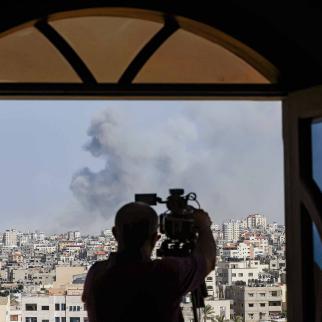
Syria: After the Earthquake
The fall of the Assad regime reshaped the political landscape, but did not translate into immediate relief for disaster-affected communities.

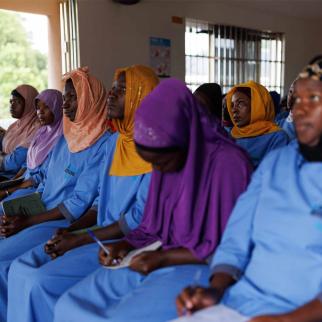
IWPR Responding in Syria
Focus is supporting Syrian partners to provide life-saving assistance as well as psychological support for adults and children.

Syrian Activists Condemn “Failure” of UN Aid Efforts
Fears that Damascus regime had politicised delivery of humanitarian relief to areas outside its control.
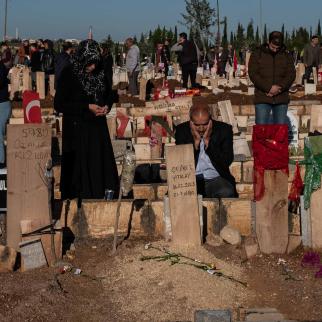
Turkey’s Earthquake Survivors Mark Another Difficult Eid
Two years later, many still live in temporary housing and struggle with the disaster’s physical and emotional consequences.
After the Earthquake
In this week’s update, read about how survivors of the devastating earthquakes in Syria are rebuilding their lives.

Welcome to IWPR’s Frontline Update, your go-to source to hear from journalists and local voices at the front lines of conflict.
THE BIG PICTURE
Three years ago, a devastating earthquake swept through parts of Turkey and Syria, leaving chaos in its wake.
Tens of thousands of people died and hundreds of thousands of homes were destroyed. Ordinary people are still struggling to rebuild their lives –physically, socially and emotionally.
VOICES FROM THE FRONTLINE
“After the fall of the Assad regime, the country entered a new phase, but the authorities are overwhelmed,” one man from the town of Jindiris in northern Syria told IWPR’s Thanaa Jebbi. “There are needs everywhere: the economy, international relations, security. We don’t know if rebuilding homes for earthquake survivors is even considered urgent.”
He noted stark comparisons between Syria and neighbouring Turkey, where the government had already provided new houses for many of those affected families.
“In Jindiris and across northern Syria, most people are still living in temporary shelters and camps, still waiting.”
In Harem, a city in the Idlib governorate, a woman who lost her son during the earthquake described how material assistance alone could not address the scale of loss.
“One NGO helped us with a new shelter, and for that we are grateful,” she said. “But I lost my son. A house does not replace a life.”
"Three years on, Syria’s earthquake survivors remain caught between unfinished recovery and an uncertain political transition,” wrote Jebbi, IWPR Syria programme manager.
“Their testimonies underline a simple truth: rebuilding is not only about infrastructure. It is about dignity, recognition, accountability, and ensuring that those most affected, especially women and displaced communities, are neither forgotten nor silenced as the country moves into its next phase.”
WHY IT MATTERS
Natural disasters have both an immediate physical impact and also far-reaching social consequences. The needs of survivors must be addressed by both emergency aid provision and sustained support, including access to information.
In Syria, IWPR redirected funds to respond to urgent needs on the ground, while highlighting the real, harmful effects of aid delays and politicised narratives on people’s lives. In Turkey, IWPR has continued to report on the plight of those affected, ensuring the voices of those disadvantaged and marginalised are not forgotten.
THE BOTTOM LINE
IWPR has long worked with Syrian journalists and civil society to build a foundation for peace and security. Local journalism plays an essential role in underscoring the impact of natural disasters on ordinary lives, and the extraordinary efforts communities make to recover. Reflecting their experiences shows the profound physical and psychological impact a disaster leaves behind - and the urgent need for support that goes beyond temporary solutions.