Suwayda, One Year On
Read about efforts to find answers to the hundreds of civilians forcibly disappeared in the Suwayda clashes in southern Syria.
Also see

Vanished: Enforced Disappearances in Suwayda
A year on, many families are still searching for answers about the fate of their loved ones.
Suwayda, One Year On
Read about efforts to find answers to the hundreds of civilians forcibly disappeared in the Suwayda clashes in southern Syria.

THE BIG PICTURE
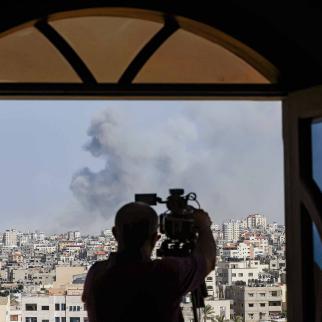
A year ago, violence swept through Syria's southern governorate of Suwayda, when clashes between armed Druze groups and Bedouin tribal factions escalated into major security operations.
A UN report subsequently found that more than 1,700 people were killed and nearly 200,000 forced from their homes, while the Syrian Observatory for Human Rights has estimated that some 560 people disappeared during the fighting.
Many families are still searching for answers.
VOICES FROM THE FRONTLINE
“The only thing we want to know: is he alive? Martyred? Where is he imprisoned?” said the mother of one victim. “His absence hits harder than any answer I would get, even if the answer was a confirmation of his death.”
The disappearances have been attributed to tribal groups, local armed factions and government forces themselves.
Ahmad Mowaffak Arabi’s sister witnessed his abduction on July 15, 2025 in the regional capital.
“They came in their military vehicles,” she explained. “They were not masked. They grabbed my brother from the street for ‘two hours of questioning’ as they said. He was not seen again since.”
Some observers argue that these violations represent a systematic pattern, using the overlap of roles among government forces and non-state actors to destroy evidence and conceal direct responsibility.
“What happened was not random chaos,” said Assi, a human rights activist who asked to remain anonymous for his own protection. “The fact that the same tools, methods and locations recur indicates prior coordination.”
WHY IT MATTERS
The disappearance of civilians – a cruel and all-too-frequent feature of conflict - leaves families facing years of uncertainty, unable to obtain official information, settle legal affairs or begin the process of grieving.
In Suwayda, local journalists and civil society organisations continue to gather testimony, verify information and document cases in the hope of future accountability and to ensure victims are not forgotten.
THE BOTTOM LINE
IWPR has worked in Syria for nearly two decades, supporting independent media and activism through years of war, division and disaster.
Partners such as Alshare - a media collective founded by a former Syrian journalist – have painstakingly documented the tens of thousands detained and disappeared by armed groups such as Islamic State (IS) and the Assad regime alike.
As Syria continues its post-conflict transition, accountability also means recognising the rights of families to know what happened to their loved ones. IWPR continues to support Syrian efforts to ensure that the search for truth remains at the heart of a just and peaceful future.