Remembering Srebrenica
In this week’s update, hear about the work done to memorialise the Srebrenica genocide and build a peaceful future.
Also see

Thirty Years After Bosnia, History Repeats Itself in Ukraine
But the international community’s unprecedented unity and support comes in sharp contrast to their response three decades ago.
Remembering Srebrenica
In this week’s update, hear about the work done to memorialise the Srebrenica genocide and build a peaceful future.

THE BIG PICTURE
July 11 marks the international day of commemoration of the 1995 Srebrenica genocide, when more than 8,000 Bosniak men and boys were murdered after Bosnian Serb forces overran the enclave.
This week we hear about how one Bosnian woman has dedicated her career to educating future generations about the consequences of hatred.
VOICES FROM THE FRONTLINE
"I was just 16 and I remember my mother taking me to bring cookies and rice to the refugees from Srebrenica who were being housed in my school and seeing all these devastated women and children in my sports hall," recalled Velma Šarić, founder of the Post-Conflict Research Center (PCRC), who grew up in the small town of Kladanj in eastern Bosnia.
"Those scenes have stayed with me, and they keep prevention as a core purpose in my work to this day," she said. "Witnessing such agony made me understand the importance of human stories."
Today, Šarić's work focuses on peacebuilding both in the Western Balkans and around the world. Initiatives include the Srebrenica Youth School, an annual programme bringing together young people from across the region and internationally to learn from survivors, historians and transitional justice experts.
She began her journalism career with IWPR in 2008, spending eight years reporting on proceedings at the International Criminal Tribunal for the former Yugoslavia (ICTY) and ongoing justice efforts.
"I never thought I would be in a position to have a voice," Šarić continued. "The possibility of following trials, looking into archives, learning about storytelling and the power of testimony was so important."
"It was challenging, but it taught me how to inform the public - not just in the Balkans but globally."
WHY IT MATTERS
IWPR began its dedicated ICTY reporting in 1996 and continued for more than two decades, covering proceedings through to the final convictions of senior figures, including Bosnian Serb military commander Ratko Mladić.
Independent coverage that explained complex legal proceedings while training local journalists helped strengthen public understanding of justice across the region while preserving an accurate historical record.
For Šarić, those records remain essential.
"The court's judicial legacy and archives are among the most important tools we have for peacebuilding and developing educational curricula about these events," she said.
Her own organisation now builds on that legacy in educational and conflict resolution initiatives as far afield as Rwanda, Cambodia and Iraq.
THE BOTTOM LINE
Srebrenica remains a defining reminder of the devastating consequences of hatred, dehumanisation and the failure to protect vulnerable populations.
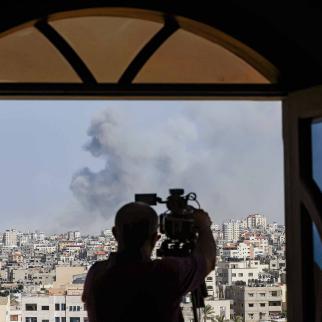
At a time when conflicts in Ukraine, Sudan and Gaza continue to raise urgent questions about accountability and the protection of civilians, the pursuit of international justice remains as important as ever.
Srebrenica demonstrates that justice is never automatic. It depends on institutions capable of investigating crimes, courts willing to hold perpetrators accountable and journalists committed to preserving historical truth.
"From the perspective of survivors and family members, the memory is always fresh," Šarić said. "The International Day of Remembrance gives us hope that the world will not forget either."