Iran Shockwaves Spread
In this week’s update, read about the global impact of the Iran war as hostilities continue.
Also see

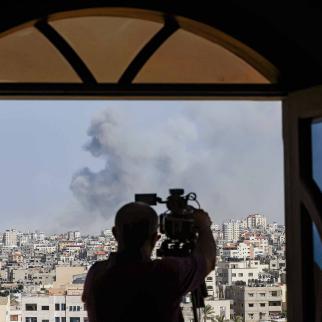
Iran War Deepens Gaza Crisis
The ongoing conflict has made a dire humanitarian situation even worse, amid sharp restrictions on aid and repeated supply disruptions.

Iran War Impacts Ukraine
Kyiv fears diminished military support and increasing international distraction - but hopes to leverage its hard-won experience of drone warfare.

Strategic Realignment for the South Caucasus?
With competing transit routes, energy supply and security interests, the emerging regional order remains highly uncertain.

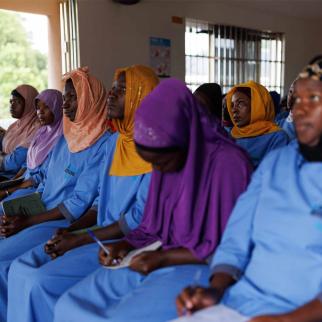
Hope and Fear Among Iranians in Turkey
For many, the crisis is shaped by bitter arguments over what kind of change - if any - should come next.

Weaponising Digital Space in War
The Iran conflict shows how easily state actors and armed groups alike exploit violence to attack critical voices.
Iran Shockwaves Spread
In this week’s update, read about the global impact of the Iran war as hostilities continue.

Welcome to IWPR’s Frontline Update, your go-to source to hear from journalists and local voices at the front lines of conflict.
THE BIG PICTURE
As the geopolitical shocks of the Iran war continues to spread, they are impacting everything from battlefield dynamics in Ukraine to energy corridors in the Caucasus and desperately needed aid in Gaza.
VOICES FROM THE FRONTLINE
“Since the escalation linked to the Iran war began, basic food items like eggs have disappeared from the market,” Safaa al-Farmawi, a 35-year-old displaced mother-of-seven in Khan Younis, told Gazan journalist Aseel Mousa this week, describing a catastrophic humanitarian situation amid repeated disruptions to aid supplies.
“Sometimes I envy those who were killed,” she said. “At least they were relieved from this suffering.”
Ukrainian journalist Veniamin Trubachov noted the conflict’s “far-reaching consequences” for the war in his own country. As world attention shifts toward the Middle East, “this has exacerbated the risk of diminishing Western military support for Kyiv,” he wrote, while noting that Ukraine was nonetheless exporting its hard-won expertise in drone warfare.
“Russia has launched more than 57,000 Iran-designed Shahed drones against Ukraine during the full-scale war, giving Ukrainian specialists a deep understanding of how to counter them.”
WHY IT MATTERS
Regional conflicts rarely stay contained. In an interconnected geopolitical landscape, shocks propagate quickly through energy markets, military supply chains and strategic geography.
Beka Bajelidze, IWPR Caucasus Regional Director, looked this week at the war’s impact on Georgia, Armenia and Azerbaijan.
“The corridor linking Europe, Central Asia and the Middle East is now at the centre of competing transit routes, energy supply and security interests,” he wrote. “Such strategic realignment is offsetting the dominant influence of Russia and its proxies, and the rising presence of China.”
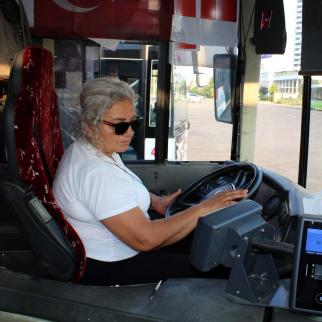
Turkey, another regional player, was aiming to protect its own borders and avoid direct engagement with the fighting; “and so far, it seems to have done a good job,” said academic Karabekir Akkoyunlu, a specialist in Turkey–Iran relations, adding that Ankara nonetheless wanted to keep its diplomatic advantage.
“Turkey’s position and Erdoğan's relationship with both sides might give it some window for being at least a site of mediation and allow it to continue the balancing act and avoid being dragged into the conflict,” he concluded.
THE BOTTOM LINE
The Iran war may yet prove to be a test of global resilience when multiple fault lines rupture at once – and underpinning our understanding of these complex crises are the civil activists and journalists who are themselves under threat.
Nadia Samet-Warren, IWPR Middle East and North Africa Country Director noted in a piece this week that war has historically provided cover for state actors and armed groups alike to launch violent campaigns against independent, critical voices.
“Malign actors will always exploit conflict and security for their own ends,” she warned. “It is of crucial importance that the work of independent civil society and professional media is protected in the face of a scenario of permanent uncertainty where truth is buried amidst other rights and freedoms.”