Inside Afghanistan’s Maternal Mortality Crisis
Read about the devastating impact of US aid cuts on Afghan women.
Also see

Inside the Deadly Collapse of Maternity Care in Afghanistan
Amid USAID cuts and Taliban restrictions, we find clinics closing, midwives disappearing, and women dying.
Inside Afghanistan’s Maternal Mortality Crisis
Read about the devastating impact of US aid cuts on Afghan women.

THE BIG PICTURE
For women in Afghanistan, pregnancy has become increasingly dangerous.
A new IWPR/Zan Times investigation—published this week in partnership with openDemocracy—lays out how the suspension of US aid in 2025 has drastically reduced access to potentially life-saving antenatal care and obstetric treatment.
VOICES FROM THE FRONTLINE
“We don’t have the people, we don’t have the equipment, we don’t have the space,” said a doctor at one of Afghanistan’s largest public hospitals. “Our hospital has 100 beds, but we are receiving more than 200 patients a day. For one bed, we have to admit three to four patients.”
Remote areas have been hit even harder.
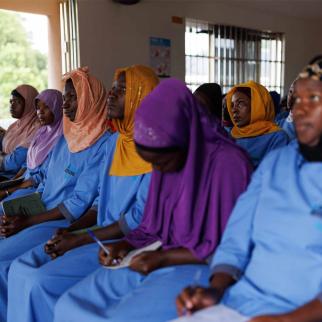
Banafsha (not her real name) used to work as a midwife with a mobile unit serving more than a dozen rural villages in Yaftal district, in eastern Afghanistan’s Badakhshan province. Her team was forced to disband in February 2025.
“Now [villagers] call us to say women are dying,” she said. “They tell us, ‘If you were here, she would be alive.’”
Another midwife, Laila (not her real name) was part of a six-person team in a clinic in Ashtarlay, a district in Central Afghanistan’s Daikundi province.
Until funding stopped last year, the centre saw up to 150 patients each day, including monitoring high-risk pregnancies.
“When the clinic closed, everything stopped,” Laila said. “Women had no one to check them.”
WHY IT MATTERS
Afghanistan has historically had one of the world’s highest maternal mortality rates, its services impacted by decades of war and reliant on international funding, with the US the largest source of humanitarian aid.
Now, according to the latest report from Richard Bennett, UN special rapporteur on the situation of human rights in Afghanistan, “shortages of essential medicines, combined with insufficient trained staff, inadequate facilities, weak referral systems, and a lack of women health workers, particularly in rural areas, are contributing to preventable maternal and neonatal deaths”.
The scale of the crisis is likely even worse than imagined. Afghanistan’s annual national maternal mortality survey has been abandoned, masking the impact of the cuts and making reports such as this one even more vital.
THE BOTTOM LINE
IWPR has worked in Afghanistan since 2002 and continues to support efforts to expose the ongoing human rights violations inside the country.
This story, part of a new IWPR programme supporting impact-focused investigations around the world, was only made possible through the brave efforts of Afghan journalists at Zan Times. Their work is testament to how, even in extraordinarily difficult circumstances, independent media still strives to provide access to reliable, accurate and essential information.