Disinformation Fuelling Fear in Mexico
In this week’s update, read about the wave of disinformation further feeding violence in Mexico.
Also see

Latin America: Security Support Provides Media “Lifeline”
Physical, psycho-emotional and digital safety consultations allow vulnerable media workers to gain key skills.
Disinformation Fuelling Fear in Mexico
In this week’s update, read about the wave of disinformation further feeding violence in Mexico.

Welcome to IWPR’s Frontline Update, your go-to source to hear from journalists and local voices at the front lines of conflict.
THE BIG PICTURE
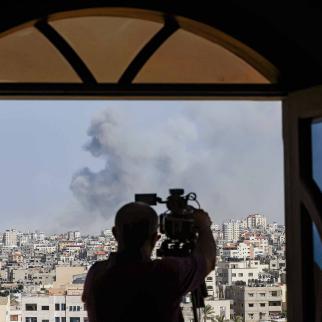
Mexico is experiencing a surge in violence following the killing of Nemesio Oseguera Cervantes, widely known as El Mencho, leader of the Jalisco New Generation Cartel (CJNG).
Amid a climate of fear exacerbated by violence and uncertainty, a wave of disinformation is spreading rapidly across social media platforms and messaging apps.
VOICES FROM THE FRONTLINE
“I saw my own messaging groups blow up with misinformation on Sunday- an unrelated local protest about water shortages was misinterpreted as being a roadblock of dangerous criminal gangs,” said Dhaniella Falk, IWPR’s Mexico-based Latin America Director. “Such misinterpretations put innocent people at real risk.”
The immediate aftermath of the targeted killing saw a wave of coordinated retaliatory attacks, including road blockades, vehicle burnings and armed confrontations.
At the same time, unverified audio messages warning of imminent strikes in multiple cities circulated widely, prompting panic buying and road closures.
Fabricated images of alleged mass casualties - some later traced to unrelated incidents - were reshared thousands of times within hours. In several instances, outdated footage from previous security incidents was recirculated and presented as current events.
WHY IT MATTERS
Analysts note that criminal groups in Mexico have previously used online intimidation campaigns to project strength, threaten rivals and undermine state authority. At the same time, politically motivated actors may exploit moments of insecurity to erode public confidence in institutions.
Digital rights groups report that automated accounts amplified rumours of further cartel offensives and alleged government cover-ups, deepening mistrust in official statements.
Regional journalists covering organised crime are at particular risk. Disinformation further heightens these vulnerabilities; reporters attempting to verify rumours may become targets of harassment campaigns, while false accusations circulated online can harm activists and local officials.
“As recent events have shown, the most dangerous areas are often far from Mexico City,” Falk said. “Local journalists need the skills, resources and security support to understand how criminal groups operate in their communities - and how they connect to broader networks - so they can provide accurate, contextualised reporting that counters misinformation and promotes accountability.”
THE BOTTOM LINE
A volatile information environment in which citizens struggle to distinguish verified security guidance from manipulation creates a critically dangerous dynamic.
Mexico remains one of the world’s most hazardous environments for the press, and media groups are urging authorities to reinforce protection mechanisms.
IWPR has supported media outlets in violence-affected states such as Sinaloa, Guanajuato and Chihuahua to strengthen their ability to investigate the criminal and corrupt networks that enable organised crime to flourish.
The coming weeks will test the Mexican state’s capacity not only to contain armed reprisals but also to ensure transparent communication, safeguard civic space and protect the information environment.