World Refugee Day
In this week’s update, read about how journalism can unpack the complex realities behind the global refugee crisis.
Also see

The Untold Stories of War
To truly understand the refugee crisis, we need to listen to those directly affected.

Ukraine: “Could I Have Done More?”
What resonates is the vulnerability and the sense of guilt that people struggle with, even those who have done so much.

Lebanon: “We Just Want a Moment of Peace”
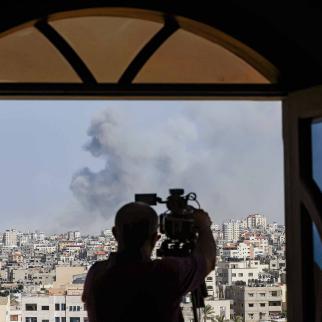
Polarisation and paralysis grow as country fears it will be pulled into a fresh conflict.
World Refugee Day
In this week’s update, read about how journalism can unpack the complex realities behind the global refugee crisis.

Welcome to IWPR’s Frontline Update, your go-to source to hear from journalists and local voices at the front lines of conflict.
THE BIG PICTURE
The UN’s latest Global Trends report reveals that there were 41.6 million refugees at the end of 2025, with an additional 68.7 million people displaced within their own country.
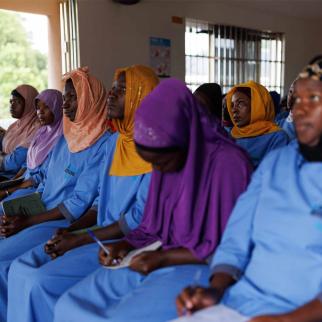
As we mark World Refugee Day, IWPR’s Nadia Samet-Warren explores the diverse experiences of hardship, uncertainty and resilience of those forced to escape conflict or violence.
VOICES FROM THE FRONTLINE
“There is no playbook for those who face risks so grave that they must flee their homes,” Middle East and North Africa country director Samet-Warren wrote. “Often their journey begins with an internal displacement – in some cases more than one – followed by an attempt to seek refuge in neighbouring countries,” she continued.
Samet-Warren described visiting innumerable refugee centres over the years and witnessing how refugees struggled to meet the most fundamental of needs including access to water, food and basic hygiene.
In one Syrian refugee camp in the Bekaa Valley, she was invited into a shelter, no more than four or five metres square, which was home to a family-of-six.
“I looked around the inside of this tent and simply couldn’t picture how everyone was able to lay down at night to sleep on the damp muddy ground,” Samet-Warren recalled.
“’My only dream is that one day the kids will again have a dry and warm bed to sleep on, wake up in the morning to eat breakfast and put clean clothes on and go to school,’” the young mother told me as she was trying to cook her family a meal, burning old shoes for a source of fire.
In another camp in northern Iraq, a 16-year-old Yazidi girl showed Samet-Warren her collection of drawings created using cardboard salvaged from a nearby rubbish dump.
“While exceptionally artistic, her paintings revealed a heartbreaking degree of pain and trauma,” Samet-Warren recalled. “It was the only kind of therapeutic outlet available to her; she told me she longed for a proper supply of paint and paper.”
WHY IT MATTERS
Refugee coverage often focuses on emergencies, displacement and statistics. While these aspects are important, journalism has the power to go further by highlighting the human stories behind the numbers - stories of resilience, adaptation and hope.
Samet-Warren noted the danger that “many continue to view refugees as a threat, even dehumanising them as if their fate was a moral judgement not a mere random act of cruel fate”.
Accurate and balanced reporting helps audiences understand the complex causes of displacement and the challenges refugees face while rebuilding their lives. It also counters misinformation, stereotypes and harmful narratives that can shape public opinion.
THE BOTTOM LINE
To truly understand the crisis, Samet-Warren wrote, "we need to acknowledge the stories of refugees; of bodies and minds violated, of children who have only known conflict, of families denied the most basic of their human rights."
“And we also need to hear the stories, away from the sometimes-misleading headlines, that showcase the amazing strength of the human spirit”.
From Ukraine to Lebanon and beyond, IWPR continues to support local voices unpacking the complex realities of those directly impacted by the refugee crisis.